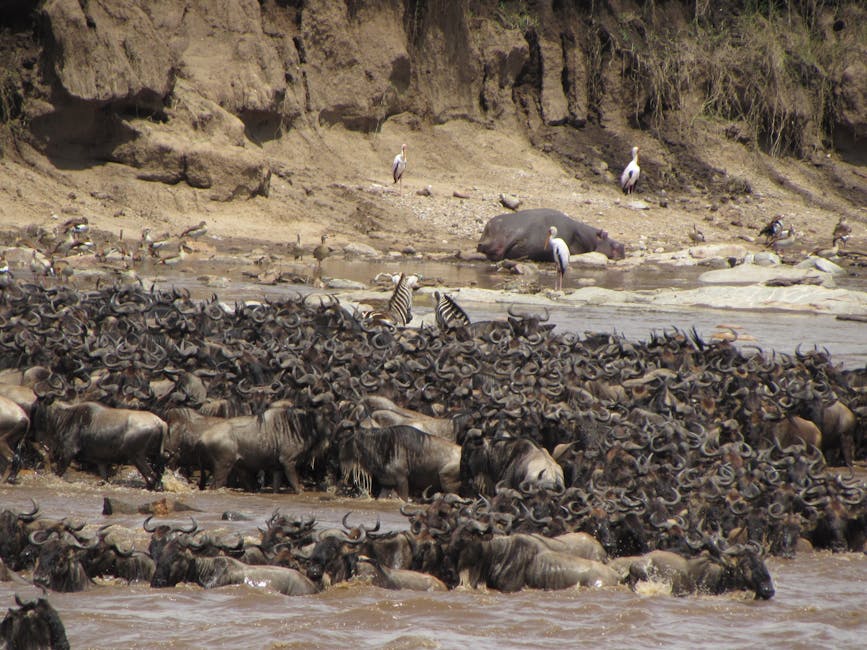
You’ll see the Great Migration in the Serengeti in every season, but the best experiences come at specific times. This guide helps you match the calendar to the action—calving in the south, then the Grumeti and Mara river crossings as the herds move north.
How the Great Migration timing works in Serengeti
The Migration isn’t one fixed “event.” It’s a living cycle driven by fresh grass and water, so the exact week can shift depending on rains. What stays consistent is the broad pattern: the herds calve in the southern grasslands first, then gradually push through central Serengeti before confronting the rivers in the west (Grumeti) and the north (Mara).
Three zones you can plan around
When you plan a “best time” trip, you’re really choosing a zone:
- South (calving season): many newborns, lots of feeding, and predator focus.
- Central (movement and grazing): herds spread and bunch depending on grass.
- North (river country): crossings and riverbank hunting dominate.
Why the “best month” can still change
Even with a month-by-month plan, Tanzania’s rainfall varies from year to year. If the short rains (roughly Oct–Dec) or the long rains (often Mar–May) come late or early, the herds may shift their pace. A good rule: treat the calendar as a planning target, then let your ranger/guide confirm the nearest herds and river conditions once you arrive.
Signature moments (and what they look like)
If you’re trying to decide which stretch of the Migration to prioritise, look for these moments:
- Serengeti National Park
- Ngorongoro Conservation Area
- Calving in the southern Serengeti
- Grumeti River crossing
- Mara River crossing
- Northern Serengeti dry-season herds
- Central Serengeti riverine grazing
- Lion hunting near crossings
- Leopard ambushes along riverbanks
Month-by-month calendar: where to look in Serengeti
Use this as your “start here” guide. Your best results come from matching your base to the herds’ likely position.
January to March: calving in the south
What you’re aiming for: newborns in the southern Serengeti and the surrounding grasslands.
- January–February: calving is usually well underway, with herds staying relatively local enough for frequent sightings of newborns and nursing.
- March: the calving pulse continues, but you may start seeing more movement as herds begin to reposition toward fresh grazing.
What wildlife viewing feels like: constant motion—adult wildebeest and zebra in tight clusters—plus predators working the margins of the herds.
April to May: transition through central Serengeti
What you’re aiming for: herds moving through the middle of the ecosystem.
- April: the herds often begin spreading out more, following greener patches and staying flexible.
- May: movement tends to continue, and this can be a great time to see lots of animals in one day—but less predictable than the river “showdowns.”
Best mindset: less about “a single crossing day” and more about tracking where the grass is.
June to July: Grumeti River crossings (western Serengeti)
What you’re aiming for: the first major river challenge in the Migration’s northward push.
- June: crossing attempts often start appearing as herds funnel toward the Grumeti.
- July: often a peak period for crossing activity.
What to expect: not every herd bunches at once. You’ll usually see movement toward the river, then waves of crossings as conditions and herd motivation line up.
August to October: Mara River crossings (northern Serengeti)
What you’re aiming for: the iconic crossings that draw most visitors.
- August: activity builds as herds reach the Mara.
- September: often the strongest stretch for crossings.
- October: can still deliver crossing sightings, depending on when herds arrived and how water levels look.
What you’ll notice: the Mara crossings can feel more dramatic because the river corridor concentrates predators and forces decisive movement.
November to December: heading back south
What you’re aiming for: the return movement as grass patterns shift.
- November: herds often begin to turn back, though the “where exactly” can vary.
- December: you’ll typically see lots of big-herd action as the cycle resets toward the southern calving zone.
Trade-off: it’s still a great time to see wildlife, but if you want the most reliable “big crossing” timing, it’s usually stronger to target earlier months (Grumeti) or September (Mara).
Where to base yourself for the right part of the circuit
Because the herds don’t stay in one place, your accommodation base matters. You’re not just choosing comfort—you’re choosing how much time you spend driving to sightings versus watching wildlife.
Southern Serengeti for calving
If your goal is newborns, prioritise the southern Serengeti period (typically January to March). This is where you’re most likely to encounter sustained calving-related activity rather than “just passing through.”
What helps: stay for enough nights that you’re not relying on one perfect day.
Central Serengeti for movement and variety
For April to May, the herds can be more spread out. That can mean fewer “guaranteed” set-piece moments, but also a broader range of sightings—herds, grazing patterns, and predator hunting as animals concentrate where conditions are best.
Grumeti (west) vs Mara (north) for crossings
If crossings are the headline of your trip, think in halves:
- Grumeti (June–July): plan to be in the west so you can respond quickly to river activity.
- Mara (Aug–Oct): plan for the north during the Mara peak window.
The biggest advantage of good timing isn’t just “being there”—it’s being positioned so that your guide can move you to the nearest productive section of river when the herd commits.
If you’re arranging bases for multiple regions, I’ve used Booking.com to check availability when travel dates are fixed.
Grumeti vs Mara crossings: what “best” looks like
People often ask which crossing is better. The more practical answer is that they’re different experiences—and the “best” one for you depends on your month.
Typical crossing windows (and what shifts them)
In general planning terms:
- Grumeti: more likely to deliver crossing action in June and July.
- Mara: more likely in August through October, with September often a highlight.
Water levels, recent rain, and herd motivation can alter the day-to-day pattern. Even in peak months, you might see longer waits before a crossing wave forms.
Viewing etiquette that protects wildlife and your chances
River crossings are intense, but you can make them safer and more respectful.
Follow these basic rules:
- Stay calm and let your guide position the vehicle; don’t push closer on your own.
- Keep noise down and avoid sudden movements.
- Never block the animals’ route or create bottlenecks.
- If a ranger/guide asks you to move back or relocate, do it promptly.
The goal is simple: watch the herd’s decision-making, not force it.
Getting photographs without disrupting the moment
If you want photos, you’ll get better results (and reduce stress on animals) by:
- Using a longer lens rather than driving closer.
- Expecting brief bursts—watch the herd’s body language for “commitment.”
- Being ready for fast changes in crowding and spacing.
Planning trade-offs: crowds, rain, and travel time
The best month isn’t only about wildlife—it’s also about whether you’ll enjoy the trip after you factor in weather and logistics.
Peak season: more vehicles, same rivers
When Mara crossings are at their height, more vehicles arrive too. That can reduce the sense of solitude and sometimes stretches the time you wait for the “right view.” The upside: you’re more likely to have multiple trained eyes scanning for activity.
Rainy-season risk (and why it can be worth it)
Travel during wetter months can bring mud, slower game drives, and occasional itinerary adjustments. That said, calving season can coincide with periods that still feel comfortable for travel, and the ecosystem productivity during greener months can be impressive.
Safety, permits, and working with your guides
To keep things smooth and safe:
- Work with a reputable guide/driver who understands Serengeti movement and river conditions.
- Follow all park instructions at river points, including any ranger directives.
- Don’t attempt to leave your vehicle outside designated areas.
And one important welfare note: during crossings, animals are already under pressure. Your job is to observe—not to feed, touch, or interfere.
Final thoughts: picking your best month in Serengeti
If you’re choosing just one target, here’s the simple match-up:
- Jan–Mar: aim for southern Serengeti calving.
- Jun–Jul: aim for the Grumeti River crossing.
- Aug–Oct (often Sep): aim for the Mara River crossing.
Then build the trip around flexibility: give your safari enough days in one zone, and trust your guide to respond to real-time conditions. That combination is what turns “we timed it” into “we saw it.”
Leave a Reply