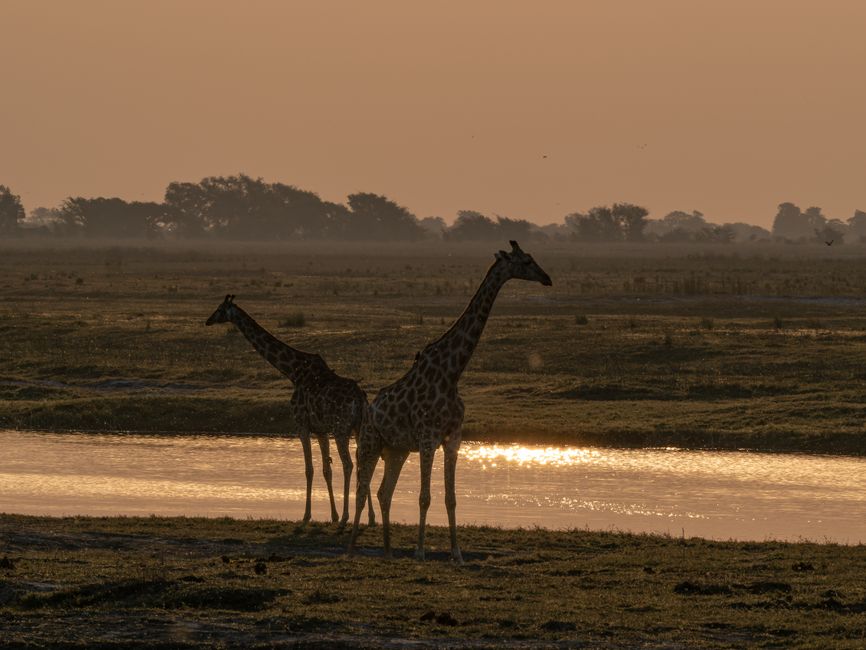
If you're planning a safari trip, you might be wondering how you can make your experience more sustainable. This guide focuses on Chobe National Park’s best sunset game drives and Chobe River cruises, with practical tips on timing, where wildlife gathers at dusk, and what to pack so you can enjoy the experience while keeping animals and local communities in mind.
You’ll learn how dusk differs from daytime in Chobe, where the highest odds of sightings often come together, and how to plan an overlap between road viewing and boat viewing. Along the way, there’s straightforward advice for wildlife respect, safety on land and water, and comfortable readiness for changing light.
Why Chobe Dusk Is the Sweet Spot
The riverfront feeding rhythm
As the day cools, many animals in Chobe shift their movement patterns toward water and the edges of floodplains. On the Chobe Riverfront (commonly in and around Kasane and Sedudu), grazing animals often become easier to track as they head for drinking and feeding zones near the waterline.
That shift matters because dusk sightings aren’t only about what’s present; they’re about how predictable movement becomes. If the light is fading and animals are relocating to water, your chances rise when you’re positioned near those travel routes and watching calmly for slow arrivals rather than rapid action.
Elephant traffic and the “quiet approach”
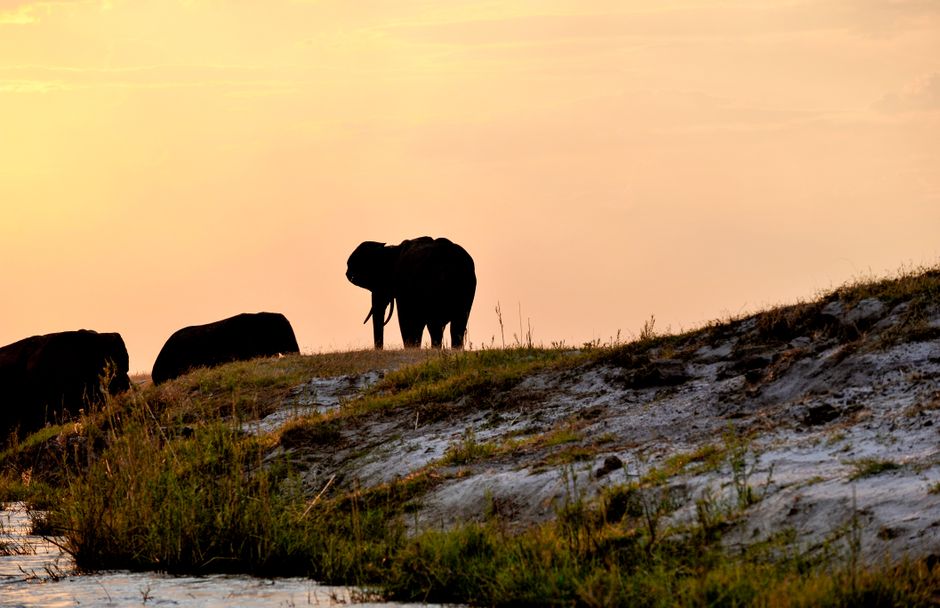
Chobe is well known for elephant activity, and at dusk you’re often looking at a steady flow: herds moving between feeding areas and water, juveniles trailing behind, and older individuals pausing to assess the surroundings. The best viewing comes from patient vehicle positioning and controlled stopping, not from circling or forcing closer approaches.
A useful mindset is to treat road viewing as “searching” until you see a pattern, then switching to “watching” once animals commit to a route. Dusk is when routines repeat.
Who appears as light drops
After sunset begins, some animals become more active and others simply become easier to spot because their silhouettes and reflections stand out near water. Expect a mix of large mammals, reptiles at the edges of channels, and river birds calling as visibility changes.
Look out for these classic dusk indicators:
- Elephant herds moving toward drinking points
- Cape buffalo on the floodplain margins
- Hippos and crocodiles around the river edge
- Lions repositioning toward suitable cover and prey movement
- Leopards showing brief, cautious daylight breaks before hiding
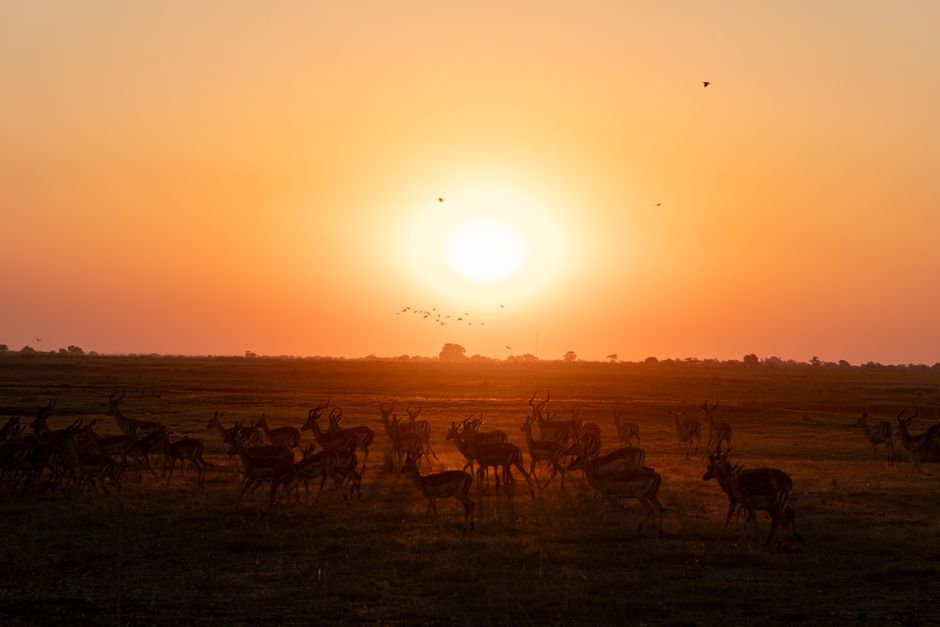
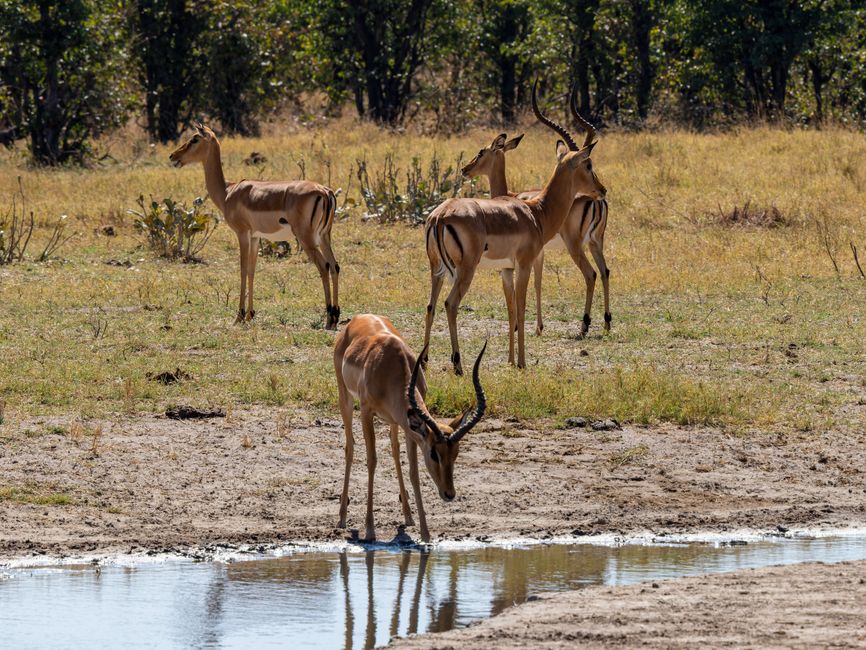
- Impala and other antelope returning to water-adjacent grazing
- African fish eagles over the river corridor
Best Sunset Game Drive Areas in Chobe
Kasane and Sedudu: where sightings gather on the road
For sunset game drives, many visitors base their planning in the Kasane/Sedudu area because it provides relatively straightforward access to wildlife routes that connect water, grazing, and cover. At dusk, the most productive approach is often to watch for animals already moving or preparing to move, rather than expecting every sighting to appear instantly.
In these sectors, keep an eye on where grass height, shade, and distance to the river align. Animals often choose routes that minimize exposure and reduce walking through open ground during low light.
Savuti grasslands: predators and drama at dusk
If your itinerary includes drives toward the Savuti region (within Chobe), dusk can deliver a different feel. The landscape is more open in places, which changes how sightings show up: you may spot movement at longer distances, and then wait as animals commit to the next stretch.
Predator opportunities can also be stronger when prey is visible and predictable. That makes dusk timing important. A drive that starts too late can catch the end of activity rather than the lead-up when animals begin to gather.
How to “read” the vehicle circuit
Even with an experienced guide, dusk viewing is partly about decisions in the moment: when to pause, when to reposition, and when not to push for a closer angle. Good guides often choose viewpoints that balance good visibility with minimal disturbance.
A helpful tip for you as a passenger: avoid leaning, standing, or using bright lights inside the vehicle. Instead, listen for the guide’s guidance on direction and location—often the quickest way to align your attention with the animals’ route.
River Cruise Timing: Matching Boat Views to Road Sightings
Plan around civil twilight, not just sunset
For Chobe River cruises, the highest value usually comes from the hours just before sunset through the transition to low light. Road sightings and boat viewing are complementary, but they don’t peak at exactly the same moment.
A practical approach is to schedule your activities so that:
- Your sunset drive ends while there’s still enough light for your guide to identify a likely movement direction.
- Your boat segment begins early enough to watch animals settle near the waterline as visibility shifts.
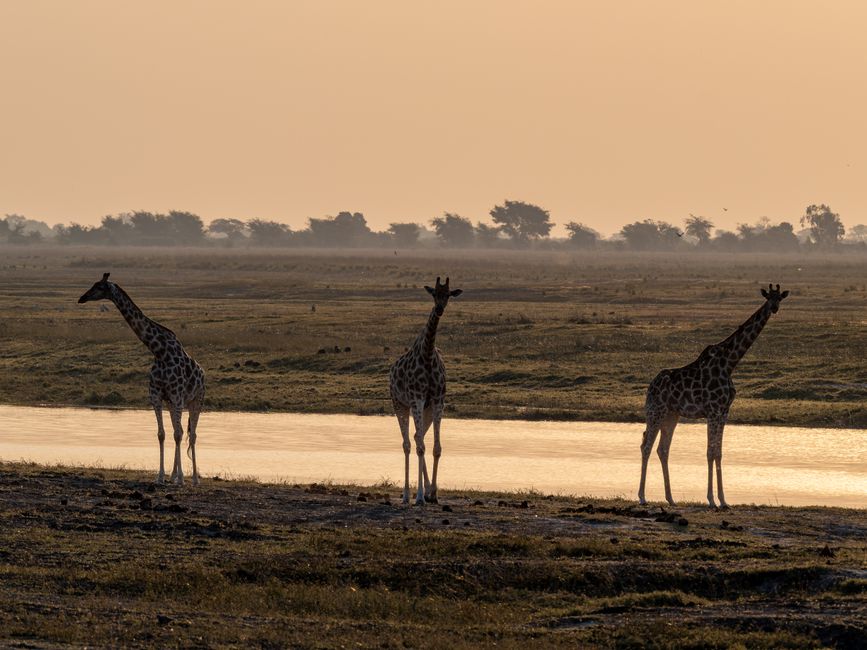
Timing varies by season and by your exact departure/arrival points, but the key idea is to plan for overlap in the “transition window,” often called civil twilight. That’s when reflections, silhouettes, and last-light activity can combine into the best viewing.
Where river cruising is strongest
Many cruise routes concentrate along the Chobe River corridor, where animals come down to drink and where crocodiles and hippos keep to channel edges. If you’re staying near Kasane, it’s common to connect road viewing on the park side with boat viewing on the river edge.
In terms of what this changes for you: you’ll see wildlife from water-level or near-water-level perspectives, which can reveal behavior that road viewing can miss, like careful movement along a bank or a sudden change in hippo breathing and surfacing patterns.
How overlap works in real life
To sync road and river experiences, it helps to think in terms of “direction” and “tempo.”
- Direction: animals commonly move between grazing areas and water, so a guide who has observed the direction of travel can set up a better handoff to the cruise.
- Tempo: dusk activity often slows after sunset begins, so both segments should be planned to catch the movement leading into low light.
A common, effective rhythm is to use the game drive for locating activity and the cruise for extending the viewing into low light, when river-edge behavior becomes more visible and the atmosphere shifts from daytime routine to evening patterns.
Dusk Etiquette and Safety on Land and Water
Keep distance and limit disruption
Dusk can make people feel like they should “get one last look,” but respectful viewing is what protects both animals and your experience. Follow your guide’s instruction on stopping distance, staying quiet, and moving only when the guide signals.
If you’re photographing, avoid rapid shutter bursts when animals are close, and don’t raise lights or flash toward wildlife. The goal is to capture moments without turning the environment into a disturbance.
Boat safety with hippos and crocodiles nearby
River cruises are thrilling partly because wildlife can be close to the boat. That closeness is also why safety rules matter. Wear provided life jackets, keep hands and cameras inside the boat, and avoid leaning over railings.
Because hippos and crocodiles are animals with predictable but serious risks, boat staff typically follow strict operating practices to avoid unnecessary approaches. Trust that process; it’s designed for animal welfare and passenger safety.
Work with your guides, not against them
In Chobe, guides understand where animals tend to pause, which routes typically keep disturbances lower, and how to balance wildlife encounters across groups of vehicles or boats. Your best contribution is simple: listen, stay seated, and be ready to adapt when visibility changes.
Strong wildlife welfare also includes respecting other visitors. If vehicles block sightlines or crowd an area, animals are more likely to move away, ending sightings sooner than needed.
Planning for the Best Sunset Drive + Cruise
Choose the right sequence for your schedule
The strongest combination usually pairs one road-based sunset game drive with one river viewing segment that carries you into low light. If your drive is too short, you may miss the period when animals are actively repositioning. If your cruise is too late, you may arrive after river-edge activity has already settled.
To get the best overlap, build a buffer for travel between lodges, park access points, and cruise departure areas. Dusk timing is tight, and traffic or late sightings can compress plans quickly.
What to pack for Chobe dusk
Dusk in Botswana can feel cool even when daytime is warm, and boat time adds wind exposure. Packing smart helps you focus on wildlife rather than comfort.
Bring:
- A light, warm layer (fleece or jacket) plus a beanie or buff for wind on the water
- A rain shell or poncho, even if rain is unlikely
- Binoculars (for distant road sightings) and a lens hood or cloth to keep water spots off gear
- Sunglasses and sun protection for the early part of the day, when light can still be bright
- Comfortable closed-toe shoes with good grip for boarding and disembarking
- A small torch or headlamp with a low setting for moving around safely after dark
- Motion-sickness prevention if you’re sensitive on boats (follow personal needs)
Also consider having some cash available for park-area essentials that may not be available at all times, and keep valuables secured where they cannot spill or be knocked during boat movement.
Make bookings that support flexibility
For choosing accommodation and coordinating timing, it helps to prioritize lodges that can match your desired start times for both the game drive and the cruise. If you’re comparing options for dates and availability, Booking.com can be a practical way to check what fits your schedule while keeping a realistic buffer for dusk.
If a trip is planned tightly with back-to-back departures, there’s less room for late-changing sightings. Where possible, allow a little breathing space so your schedule supports wildlife rather than forcing it.
Overall, the best Chobe sunset experience comes from understanding that dusk is about movement and transition: animals shift toward water, river-edge behavior becomes more visible, and your job is to time the handoff between road viewing and boat cruising while staying comfortable and respectful. When schedules are built around twilight, and viewing remains calm and regulated, Chobe’s evening wildlife can feel both dramatic and well managed.
Leave a Reply