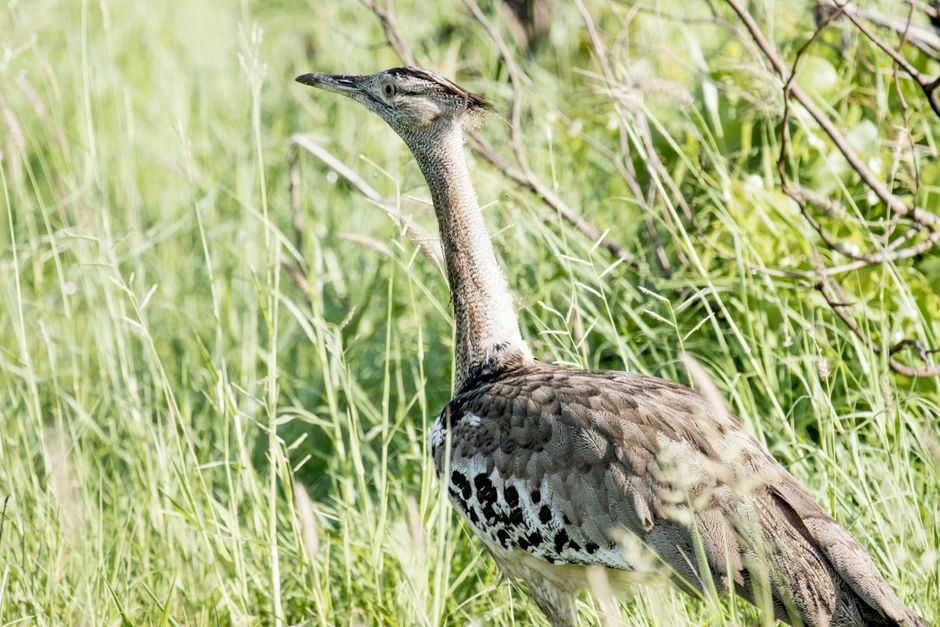
If you’re a birding enthusiast, then you know that Africa is a paradise for birdwatching. For many species, the “where” is half the challenge. For Cory’s bustard, the “when” and the “how you search” are just as important.
This guide helps you plan a Cory bustard safari in Botswana with practical seasonal timing, clear access-route thinking, and a realistic day-by-day approach focused on sightings in open grasslands. It also explains why a skilled guide matters when the birds are hard to find—and how to view responsibly once you’re in the right habitat.
Cory Bustards and What Drives Their Location
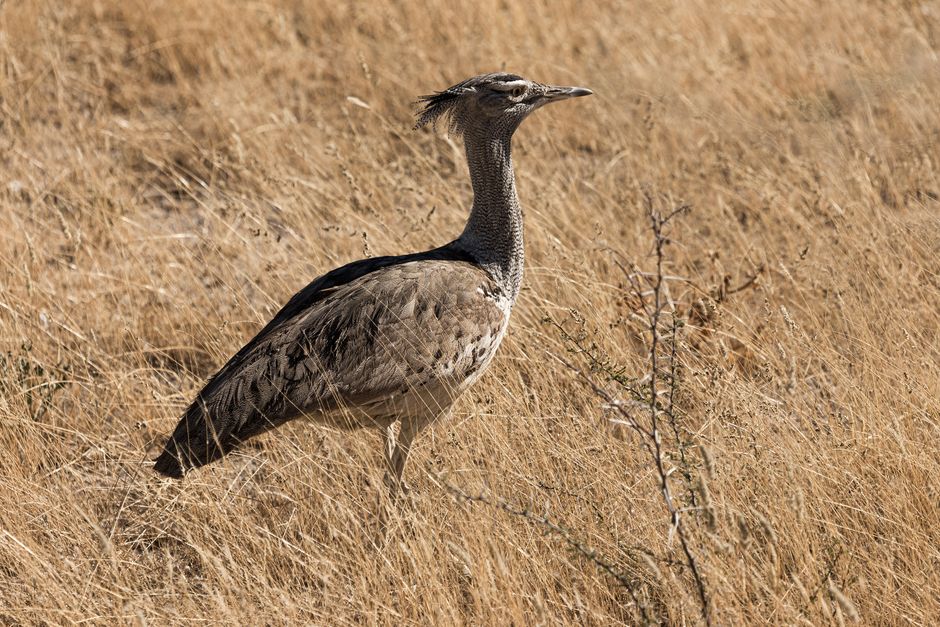
Open Grassland Is the Main Stage
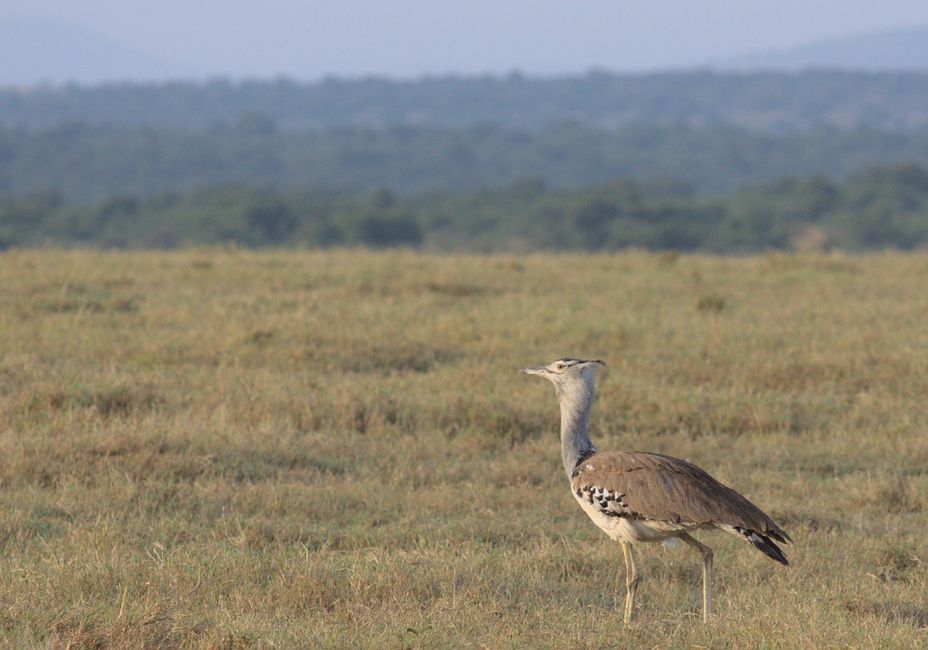
Cory’s bustard is a grassland specialist. You’ll have the best odds when you focus effort on broad, open plains where visibility is good and the ground cover isn’t too tall. In Botswana, this usually means targeting the drier, grass-dominant areas of the Central Kalahari Game Reserve, Khutse Game Reserve, and the Makgadikgadi Pans region, including Nxai Pan and Sua Pan.
Even within the same reserve, bustards won’t use every patch equally. The best “search areas” are typically those that combine open sightlines with the right mix of grass structure and ground conditions for foraging and standing/camouflaging.
Seasonal Behaviour: Activity Without Predictability
Cory’s bustard is not a “guarantee” species. Seasonal timing helps, but it doesn’t replace careful searching. In general, when grasses are less lush and visibility is higher, bustards are easier to spot from distance. That improves your ability to scan systematically rather than spending long periods guessing.
As the season shifts toward wetter periods, the habitat can become more visually complex. Bustards may still be present, but finding them takes more effort because their camouflage blends into a more textured background.
Why This Becomes a Search Strategy Safari
For hard-to-find grassland targets, your plan has to treat sightings as something you actively manage: where you drive, where you stop, how you scan, and how you respond if you get a brief look and then lose it. The best results come from consistent routines (especially in the first hours of daylight) rather than random stops.
When to Go: Seasonal Timing That Improves Your Odds
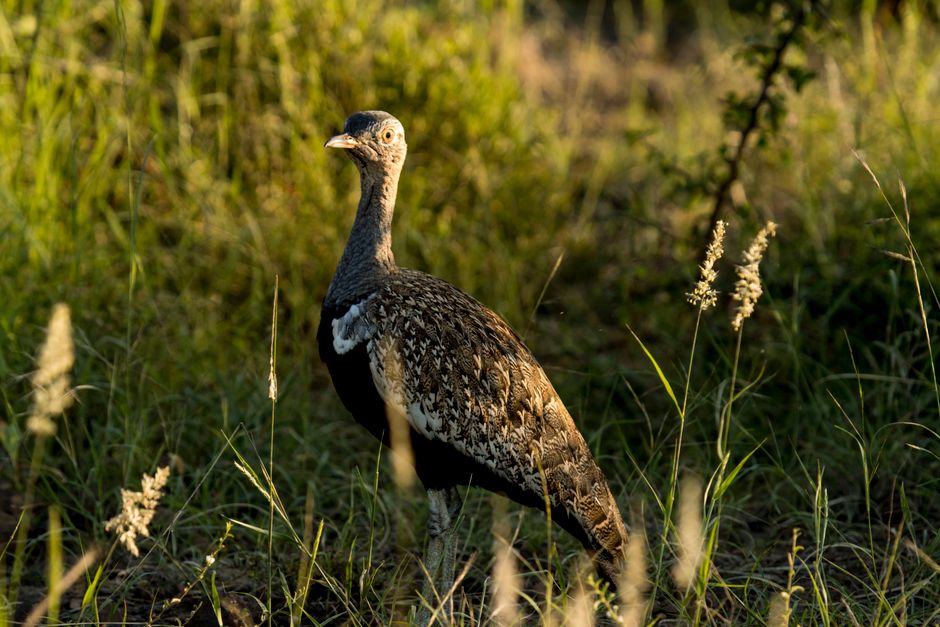
Dry Season vs Rainy Season Trade-Offs
For Cory’s bustard, the biggest seasonal lever is habitat visibility. During the drier parts of the year, open grasslands tend to be easier to read from a vehicle and on foot, which supports more effective scanning. During wetter periods, grasses can grow quickly, reducing visual clarity and making it harder to pick out a standing bird against the ground.
That said, “best” timing depends on your goal:
- If your priority is detecting birds visually, plan around the season when ground cover is less dense and the light is clear.
- If your priority is observing more active behaviour, expect variation. Activity can increase during favourable conditions, but you may need more time and a slightly more patient search approach.
The practical takeaway: choose a season that matches your comfort level with long scans and uncertain contact frequency.
The Best Daily Window for Grassland Scanning
Bustards are most detectable when you can combine strong visibility with calmer wildlife conditions. Many birders find the best results in the early morning and again later in the day. Midday can still hold birds, but heat and glare often reduce your ability to spot and track them.
A good rule of thumb is to structure your day so that you spend the first part of the day actively searching, pause when conditions are hardest to see clearly, then return to searching with fresh eyes.
Weather Checks and Flexibility
In open Botswana grasslands, weather affects both visibility and access routes. Wind can reduce scanning accuracy and make it harder to hear subtle cues. Rain can improve habitat conditions for birds, but it can also change road surfaces and water availability.
Build flexibility into your plan so you’re not “locked” into one spot if the habitat conditions don’t match your expectations. A responsible guiding team will adjust without pushing disturbance or driving in ways that risk damaging tracks or vegetation.
Access Routes and Base Choices in Botswana
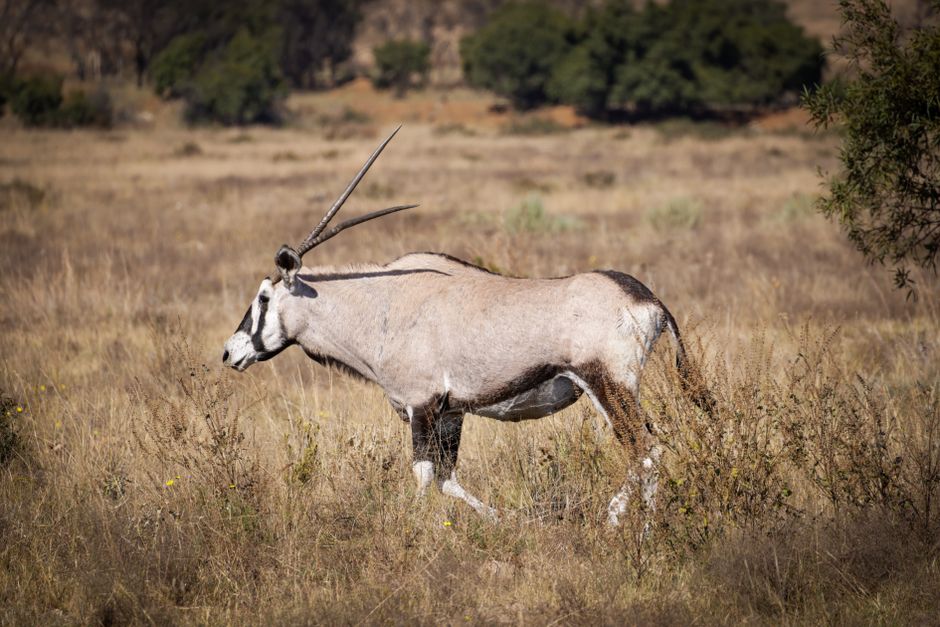
Choose Your Grassland Bases (Not Just Your Coordinates)
Because Cory’s bustard is tied to grassland habitat and often moves between suitable patches, your base choice should support repeated search opportunities. In Botswana, three core options tend to work well for planning:
- Central Kalahari Game Reserve for large-scale open grassland searching
- Khutse Game Reserve when you want more compact travel logistics while still focusing on open country
- Makgadikgadi Pans, including Nxai Pan and Sua Pan, for a distinctive dry-season landscape where visibility can be excellent
Instead of aiming for a single “final stop,” think of your itinerary as moving your search effort across several workable habitat types.
Driving and Arrival Planning in Real Time
Access routes are rarely just about getting from A to B. They’re also about how quickly you can be in the right habitat at the right time of day. For example, arriving late in the day can push you into low-visibility searching when you’d rather begin with a strong morning scan.
Practically, plan for:
- early-day departures when you need first-light searching
- enough buffer time for road conditions, gates, and refuelling
- a 4x4 approach for remote access areas, with realistic tyre and fuel planning
If self-driving, keep your driving smooth and predictable. Sudden changes can disturb wildlife and make it harder to observe birds responsibly.
Where Guiding Really Matters
With Cory’s bustard, guiding is not only about “finding” a bird. It’s about improving your search method:
A strong guide typically helps with reading habitat structure quickly, interpreting how wildlife is using the landscape, and deciding when to stop long enough to scan without lingering in a way that causes repeated disturbance.
Just as importantly, a good bird-focused guide manages the tiny decisions that create sightings: how to position for light and sightlines, when to move a short distance rather than sweeping a large area from one point, and how to keep the team quiet and still when a bird might be present but hard to confirm.
A Day-by-Day Grasslands Plan for Sightings
Day 1–2: Start with Search Discipline
On your first day in the grasslands, the aim is to establish your “baseline” routine. Arrive, settle, and then spend the opening window on systematic scanning rather than chasing likely-sounding leads.
If you’ve chosen Central Kalahari Game Reserve as a base, focus early effort on open patches with good sightlines. If you’re in Khutse Game Reserve, treat your first day as learning the local movement patterns: which directions birds and other large animals tend to use when the light changes.
Day 2 should build on Day 1. If you recorded any brief sightings or strong habitat indicators (even without certainty), return to the most promising parts early and repeat scanning with the same approach.
Day 3–4: Move Between Habitat Blocks, Not Just Spots
By Day 3 or 4, you’ll usually learn whether the birds are “present but not visible” or “not using this section of grassland.” The best mid-trip adjustment is to change habitat blocks rather than oscillating between the same viewpoints.
In the Makgadikgadi Pans area, including Nxai Pan and Sua Pan, treat each landscape type as its own search field. The key is to give each area enough time for your eyes and scanning method to work. A short stop now and then rarely outperforms a planned block of searching where you scan consistently.
If you do get a potential sighting, don’t rush into long chases or repeated repositioning. Instead, pause, confirm direction and distance, and consider what you can responsibly do to re-locate the bird with minimal disturbance.
Day 5: The “Confirm and Refine” Day
Your final grasslands day should be about refining what’s working. If dry-season visibility is your advantage, use it aggressively in the early morning. If your sightings were less consistent, switch to a calmer approach: fewer moves, longer scanning pauses, and closer attention to the kind of grass structure that matches what you saw.
If time allows, add one deliberately structured search session near where you previously found the best indicators. Bustards may not be predictable, but their “habitat preferences” usually repeat. Your job is to focus effort where repeat chances exist.
Viewing Ethics, Safety, and Conservation Mindsets
Keep Distance First: Camouflage Means Caution
Cory’s bustard can look easy to “spot” once you know what to look for, but that doesn’t mean it’s safe or ethical to approach. The priority is to avoid stressing the bird or breaking its ability to blend into the grass.
Use long-distance viewing where possible. If a bird is standing and still, treat movement as a cue to pause rather than to close the gap.
Vehicle and Foot Safety in Open Country
Open grassland can feel straightforward, but it comes with hazards: uneven ground, low visibility in glare, and limited escape routes if you’re walking away from your vehicle in rough conditions.
Work with a guide to set clear safety rules before you leave the vehicle. If you’re scanning from the roadside, keep vehicle positioning stable and avoid unnecessary repositioning that can disturb other wildlife.
Responsible Search Rules That Protect Birds and Land
Good birding in Botswana’s grasslands is about protecting both wildlife and habitat. A practical set of rules helps keep the experience respectful and safe:
- Stop moving when you locate a bird, and only reposition if the guide judges it’s necessary and low-impact.
- Avoid playback or crowding to “force” a response; let behaviour happen naturally.
- Stay aware of local land use and respect park rules, especially around roads, tracks, and sensitive ground cover.
Overall, the most reliable way to plan a Cory bustard safari is to treat it like a controlled search: choose grassland-rich areas such as Central Kalahari Game Reserve, Khutse Game Reserve, and the Makgadikgadi Pans (including Nxai Pan and Sua Pan), time your days for high-visibility scanning, and rely on skilled guidance to keep you both effective and responsible. By following these principles, your chances of a real sighting improve, and your impact stays aligned with the welfare and conservation standards that make long-term wildlife viewing possible.
Leave a Reply