
Are you interested in experiencing the vibrant culture of San communities near the Kgalagadi Transfrontier Park? This guide helps you plan consent-based community visits that are respectful, safe, and shaped by the people who host them.
Below, you’ll find practical advice on where such experiences are offered, what a respectful tour often includes, and exactly what questions to ask before photos, stories, or workshops happen. The aim is simple: learn without taking, and support fairly without creating pressure or dependency.
Understanding San Cultural Visits in the Kalahari

Community stewardship and consent
San cultural visits should feel like participation in someone else’s community life, not like a “show.” In a good setup, your host explains what is appropriate to share with visitors and what is not. Consent is ongoing: if a topic or activity becomes uncomfortable, the visit should adapt without you arguing for “just one more” detail.
Respect also means understanding that knowledge and traditions are not meant to be extracted. Some parts of culture may be shared only in specific settings, seasons, or with certain audiences. If a guide offers context, listen for the boundaries as much as the information.
What “community-run” should mean
“Community-run” is a useful phrase only when it is backed by practice. Look for signs such as local people leading the session, community members speaking for their own heritage, and the host explaining where proceeds support community priorities.
If an operator controls everything from marketing to payments, you may still have an interesting visit, but it should not be presented as community-run unless the community is genuinely leading and benefiting.
Cultural protocols before you arrive
A respectful visit starts before you show up. Basic courtesies matter: dress neatly for a cultural setting, arrive on time, and avoid arriving as if you’re entitled to an experience.
If you have questions about how you should behave, ask them ahead of time rather than during the session. Many communities prefer direct, polite communication over surprise “gotcha” questions.
Where to Find San Experiences Near the Park

Pairing cultural visits with Kgalagadi travel
A San visit around the Kgalagadi is usually best planned as a day or half-day add-on to your wider trip. This keeps the visit unhurried and allows your hosts time to run their activities without feeling rushed.
On either side of the park, the most meaningful experiences tend to be those where guides can explain what’s appropriate for visitors and where the community itself controls the structure.
Botswana and South Africa: choosing the right side
The Kgalagadi Transfrontier Park spans Botswana and South Africa, and cultural experiences may connect more strongly with nearby communities on each side. The practical takeaway is to ask your host whether the experience is led by community members associated with that region, and how the visit is coordinated locally.
If you’re travelling between borders, build in buffer time. A culture visit is not improved by rushing across a long distance right before people are due to host you.
Selecting a community contact through your itinerary
Choose the contact that is most accountable to the community, not just the one with the most convenient schedule. If you’re comparing options, look for clear communication about consent, photography, and what is included.
If you’re arranging a multi-day itinerary, a platform like Viator can help you compare community-run options, but always confirm the tour is consent- and community-led.
How Respectful Tours Usually Work
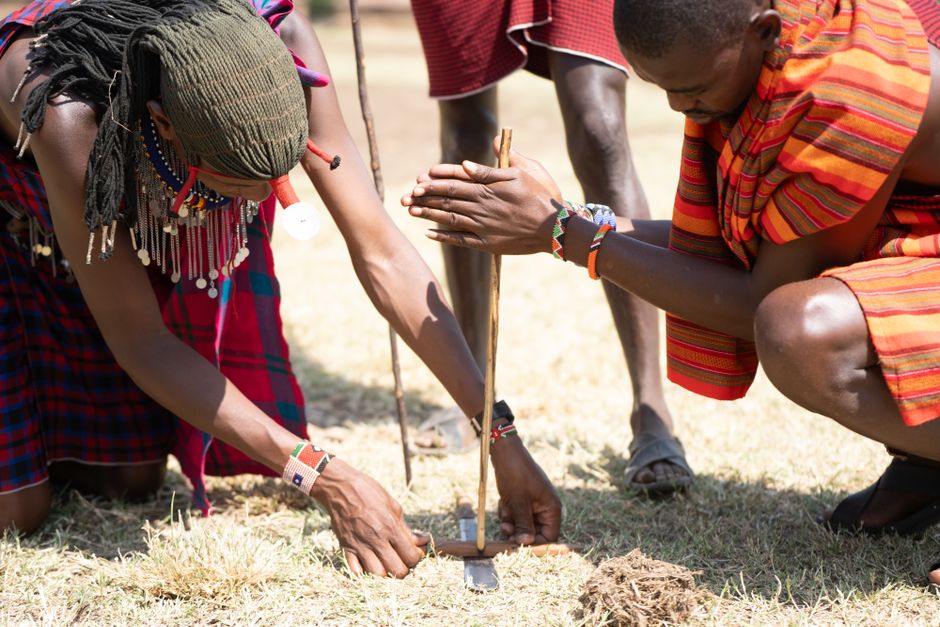
Common experience formats you may be offered
A respectful San cultural visit should include a clear sense of purpose and boundaries. Depending on what your host decides is appropriate, you might encounter:
- Kgalagadi Transfrontier Park (as your wider safari base and context for the landscape)
- Storytelling and interpretation guided by community members
- Traditional tracking and landscape knowledge explained by local experts
- Craft or beadwork workshops where participants make items (or observe) with permission
- Food, music, or cultural demonstrations shared only when your host invites participation
What your host should explain clearly
Before anything starts, a good host will set expectations. That often includes: the pace of the session, whether questions are welcome throughout, and whether there are topics that are private.
If photography is possible, hosts should indicate when it is acceptable and when it is not. Likewise, if participation is optional, it should never feel like you must join in to be respectful.
Photography, payments, and the tone of exchange
Photography is a sensitive area across cultures. Even when someone agrees to a photo, it should feel like a choice, not a transaction. Watch for cues: does the host look comfortable, or do they pause and glance to someone else for confirmation?
Payments should be handled respectfully, ideally with transparent communication about what fees support. Avoid bargaining aggressively. If a community member sets a price, treat it as part of maintaining dignity and sustainability.
Questions to Ask (and What to Avoid) for Consent-Based Respect

Questions that lead to respectful conversations
Asking good questions helps you learn without crossing lines. These are strong prompts to take with you:
- “What parts of your culture can be shared with visitors, and what should we leave private?”
- “Is photography allowed? If yes, when is it appropriate, and are there moments when it isn’t?”
- “If I ask questions during the session, are there topics you’d prefer not to discuss?”
- “How does this visit support your community, and who benefits directly?”
- “If someone in the group is uncomfortable, how should we handle it?”
- “Are there specific behaviours you’d like us to avoid during the visit?”
These questions signal that you understand cultural knowledge is not automatically public.
What to avoid asking for
Some visitor requests can turn respect into pressure. Avoid asking for sacred or highly private information just because you feel curious. Also avoid asking for information framed as “prove it” or “show me the real version,” which can reduce living culture to a performance.
Be cautious with requests that involve recordings or reproductions beyond what your host offers. If your host does not initiate video or audio, treat it as permission-limited.
Sensitive topics: how to handle them well
If a topic feels uncomfortable, let it go. A respectful visitor doesn’t push for more detail; they recognise that boundaries exist to protect people, relationships, and community wellbeing.
If you accidentally ask something that shouldn’t be shared, apologise briefly and redirect. You can say something simple like, “Thanks for telling me, I understand. Could we focus on what’s shareable instead?”
Make the Most of Your Visit While Staying Ethical
Timing and pacing that protect dignity
Cultural sessions often work best when travel logistics don’t crowd them out. Plan enough time to arrive calmly, greet people properly, and give attention throughout. If you’re combining the visit with long drives in the Kgalagadi heat, organise a schedule that prevents exhaustion.
Also consider seasonality. Some activities and community routines depend on time of year, and a respectful host may adjust the plan accordingly.
Supporting fairly, without creating dependency
Fair support is more than money. It also includes acknowledging the value of the host’s time and knowledge. If your hosts explain how proceeds are used, listen and treat that information as part of the experience.
If souvenirs are available, buy only what is offered and explained respectfully. Avoid taking items “to show family” without understanding whether items are for sale, communal, or personal.
Building a responsible safari itinerary
The most responsible itineraries connect your curiosity to restraint. That means choosing experiences where community members lead, where consent is clear, and where participation is optional.
If your plan can include time for rest and reflection, it also improves how you show up. A calm visitor is easier to host, and that protects both the community experience and your own safety in remote environments.
Overall, the best San community tours near the Kgalagadi Transfrontier Park are those where consent is practiced in real time, boundaries are respected without argument, and community members set the pace and content. By asking thoughtful questions, avoiding pressure around sensitive topics, and supporting fairly, you can learn from living heritage while protecting the dignity and wellbeing of the people who share it.
Leave a Reply