
If you're planning a safari trip, you might be wondering how you can make your experience more sustainable. Ocean wildlife viewing is only worthwhile when it’s done carefully, with the right expectations and the right distances.
This guide focuses on the best time for minke whales and dolphin sightings around Cape Town. It also covers the cool-current conditions that shape the season, and practical ways to choose between boat-based cruises and shore-based watching so you get the best odds without rushing wildlife.
Where to Look for Minke Whales and Dolphins Near Cape Town

For shore viewing, you’ll generally have the most rewarding sessions when you can scan open water rather than sheltered harbour channels. For boat trips, this is where operators typically plan routes based on recent sightings, wind, and sea state.
Hermanus and Walker Bay
For many travellers, Hermanus (with its access to Walker Bay waters) is the headline name for whale season along the Western Cape. While minke whales are not as guaranteed as some larger whale species, the broader “whale season” activity in these bays often increases your chances of seeing smaller whales at the surface.
Shore-based viewing here tends to be more structured: you can take your time, watch for blows and surfacing patterns from viewpoints, and then adjust your plan if the action shifts.
Target species you may encounter
You may see different whale and dolphin combinations depending on the day’s conditions. Typical targets include:
- Minke whales
- Dusky dolphins
- Bottlenose dolphins
Best Months for Minke Whales and Dolphins in Cape Town

Even within the “best months,” remember that whale sightings can be patchy. Instead of hunting a fixed date, choose a travel window wide enough to adjust if the sea state changes.
Dolphin activity: year-round with a seasonal shift
Dolphins are present around the Cape Peninsula and False Bay through much of the year, but sightings can feel noticeably different by season. During cooler periods, dolphins often appear more frequently near where currents and upwelling bring nutrients and prey closer to the surface.
A practical way to think about it: if the water looks “alive” (active surface movement, seabirds clustering, and recurring surfacing), dolphins and whales are more likely to be nearby.
How the day of the week matters less than the conditions
For marine mammals, conditions often beat calendars. Wind strength, swell, and current direction can change what’s visible from shore and how far boats can safely travel. Because of that, treat “peak months” as an advantage—not a guarantee.
Sea Conditions to Expect During the Cool-Current Season

Cool-water periods can also produce more stirring at the surface. That can improve the odds of locating activity, but it can come with short-lived sightings rather than long, continuous surface time.
Choppy afternoons and stronger winds
Winter to early spring can bring stronger winds and more variable sea state. For boats, this usually means smoother mornings and more uncomfortable afternoons when wind picks up. For shore watchers, the same weather can either help (waves break consistently, making blows easier to time) or hinder (reduced visibility and glare).
Plan for flexibility. If one location becomes too rough to watch comfortably, switching to a better angle of open water can make more difference than chasing the exact spot.
Surface signs to look for at a respectful distance
You’ll never control where whales surface, but you can notice cues. Seabirds may gather when prey is near the surface. Dolphins may create regular patterns of surfacing or fast, coordinated movement. If you see activity, don’t rush closer; keep scanning from a stable viewpoint and follow the lead of qualified boat staff if you’re on the water.
Boat Viewing vs Shore-Based Watching: How to Choose
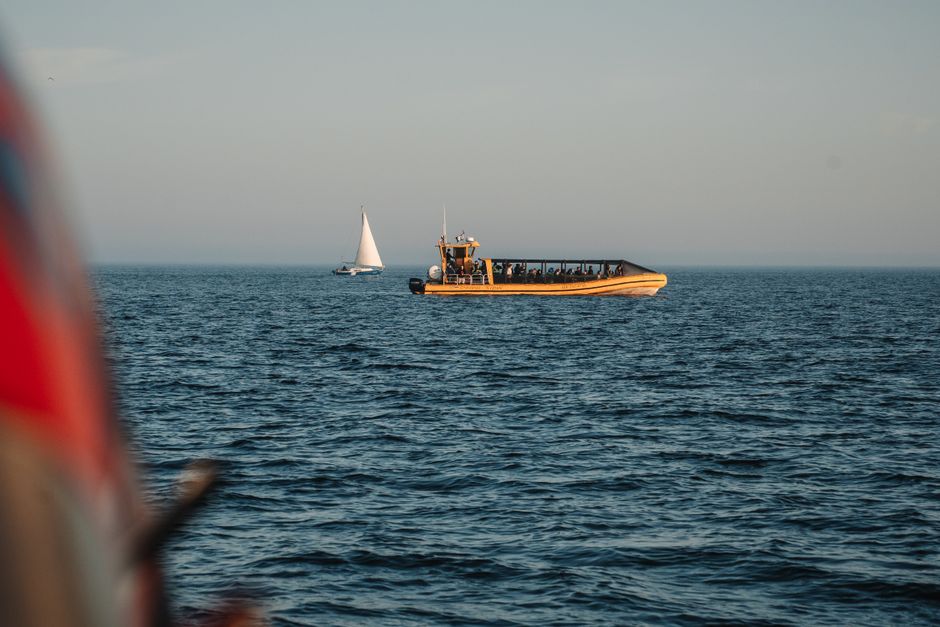
A good operator plans routes around recent reports and respects marine welfare. On the water, the crew should be able to adjust speed and heading to avoid crowding animals.
Shore watching: when calm angles and patience pay off
Shore-based viewing works best when you can see open water and have time to wait. Look for viewpoints with a clear line to areas where currents bring food; then commit to watching rather than checking your phone every few minutes.
Shore watchers also tend to be able to keep consistent eye-level scanning, which helps when sightings are brief. For minke whales in particular, short surfacing can be easy to miss without steady attention.
Combining both for the best odds
A strong approach is to pick one primary viewing method and use the other as a “second chance” on days when conditions shift. For example, if winds make boat rides less comfortable, shore watching can become the main plan. If shore conditions are obscured by swell or glare, a morning cruise may still give you a better chance.
If you’re deciding between the two, a quick rule of thumb is:
- Choose a boat when animals are likely to be farther offshore or when wind hides the best shore angles.
- Choose the shore when conditions are calm and you can see open water without straining to look into glare.
- Prefer mornings for both methods, since the sea often smooths out before afternoon wind builds.
Wildlife Welfare, Safety, and Respectful Etiquette
Give whales and dolphins space and time
Minke whales and dolphins can approach boats and watchers, but that doesn’t mean the sighting should turn into a chase. Keep a respectful distance, avoid sudden changes in position, and don’t try to “block” an animal’s path.
If you’re on a boat, follow crew instructions immediately. If you’re on shore, use binoculars or a camera zoom rather than moving closer to the water’s edge than is safe.
Choose operators with low-impact practices
When booking boat cruises, quality matters more than hype. Look for operators that:
- Follow a calm, controlled approach and reduce engine impact
- Keep time-on-animal reasonable rather than lingering in a way that stresses wildlife
- Brief passengers on welfare and safety before departure
Even the best operator can’t control the ocean, but responsible behaviour helps ensure that sightings remain positive for wildlife and for the local communities watching the coastline.
Safety basics for cool-current conditions
Cold water, spray, and wind chill are common challenges. Dress in layers, plan for wet conditions, and make sure everyone in the group understands where to stand and how to move safely on deck.
Onshore, watch for slippery rocks, strong surf, and uneven ground at viewpoints. Give yourself enough time to arrive early and park/stow gear without rushing.
Overall, the best time for minke whales and dolphin sightings around Cape Town is typically mid-year through early spring, with July to September often offering strong odds. Pair that seasonal window with realistic sea-condition expectations, choose shore or boat based on wind and visibility, and always prioritise respectful distance and safe viewing—then your chances of memorable, welfare-friendly wildlife encounters increase.
Leave a Reply