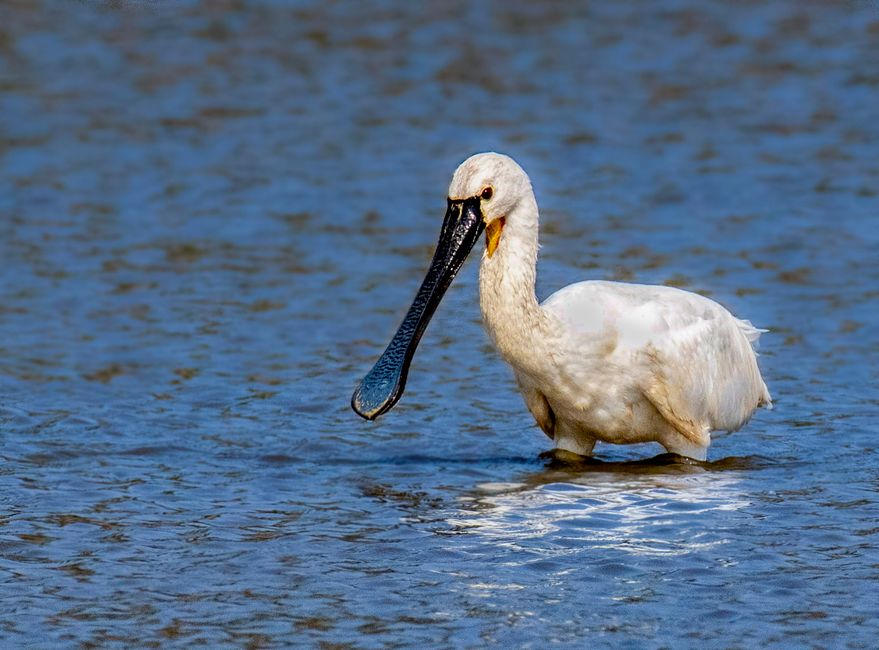
If you're a birding enthusiast, then you know that Africa is a paradise for birdwatching. If you're heading for Zambia’s Bangweulu Wetlands, this guide shows you how to find African spoonbills and the broader mix of wading birds that often feed alongside them.
You’ll get practical pointers on where to watch, how to use boat or paddle access points without disturbing birds, and what conditions tend to bring in the most activity. The focus stays on ethical wildlife viewing and on making the most of short windows of good light.
Best Viewing Zones for African Spoonbills and Wading Birds
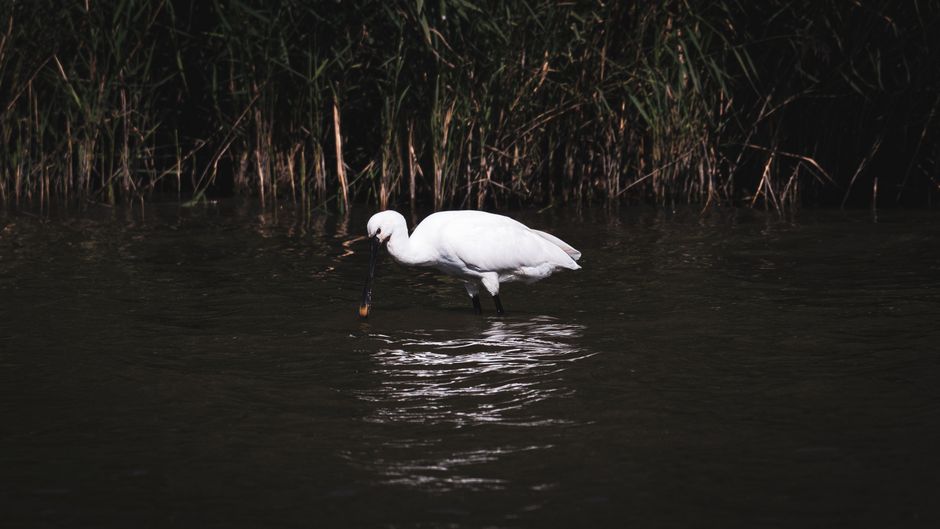
Why Spoonbills Cluster With Other Waders
African spoonbills (with their distinctive spoon-shaped bills) feed by sweeping through shallow water and mud. That feeding style often overlaps with other long-legged waders that use similar shallow edges, so mixed flocks are common when water is right.
Look for areas where water is shallow enough for “walk-and-probe” feeding but open enough for birds to access food. In Bangweulu, that usually means strong variety at the margins: reeds meeting lagoons, papyrus edges meeting mud, and floating vegetation meeting calmer channels.
Top Spots to Prioritise in Bangweulu Swamps
Use these as your “first sweep” zones when you reach the swamp. A good strategy is to start quietly, then move only a short distance if birds are feeding elsewhere.
- Open-water lagoons near swamp channels: scanning for spoonbill feeding lines and other waders working the shallows
- Reedbed and papyrus edges: best for watching birds pause, preen, and then resume feeding just offshore
- Exposed mudflats along the waterline: ideal when water depth drops and waders can probe deeper without getting stuck
- Seasonal floodplain pans and shallow backwaters: often where spoonbills and egrets converge after water shifts
- Creeks and narrow channels between floating vegetation: productive for mixed flocks because the habitat funnels movement
How to Choose Your Setup Point
Once you’ve identified a zone, choose a spot that lets you watch from a stable position. Aim for an observation position that keeps you upwind or at least not downwind of feeding birds, so your presence doesn’t push them into constant scanning. If you’re boating or paddling, plan to stop where birds are already feeding rather than arriving right into their space.
Boat and Paddle Access Points: Getting Into the Right Water
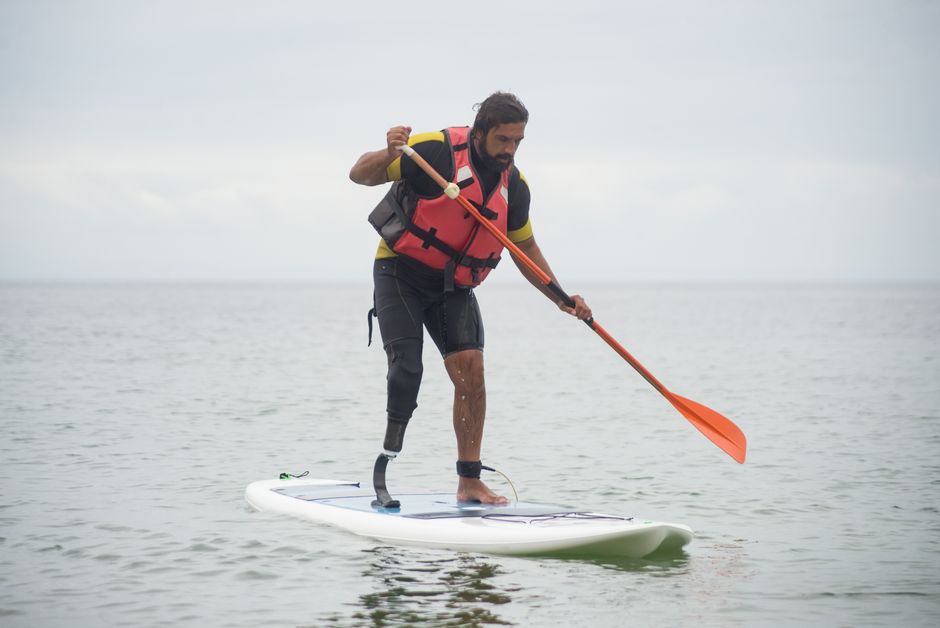
Guided Boat Routes vs. Quiet Paddling
Boat access is typically the fastest way to reach productive channels and lagoons, especially where distances are longer or the terrain is soft. Paddling (or very slow, shallow craft) can add stealth: it reduces engine noise and allows careful stops at reed and mud margins.
For many visitors, the most reliable approach is to combine both: start with a boat to reach a promising zone, then switch to slow, quiet movement for the last stretch where birds are actively feeding.
Launch Decisions That Matter for Birds
Good access points are not just about convenience; they’re about depth, cover, and how birds react to approach. Ask your local guide to consider:
- where the water is shallow enough for safe craft movement without grounding
- where there’s a protected channel edge you can watch from without cutting across bird flight paths
- which side of the lagoon has the best “watch line” (a place where birds feed parallel to your position)
If you’re arranging activities, it can help to check availability with a platform like Viator when you want to compare options for guided wetland trips and local boat support.
Micro-Routes for Mixed Flocks
When spoonbills are present, mixed waders often show up as a “moving mosaic”: different species feed in different micro-depths, and the flock can shift from open water to reed edges within minutes. Rather than covering lots of ground, use micro-routes:
- stop at the edge first (birds often feed close to cover)
- then drift to the feeding line (where you see repetitive bill-sweeping or probing)
- finally, return to the resting line near reeds (birds frequently pause there)
This approach maximises sightings while keeping disturbance low.
Best Conditions for Mixed Wader Flocks
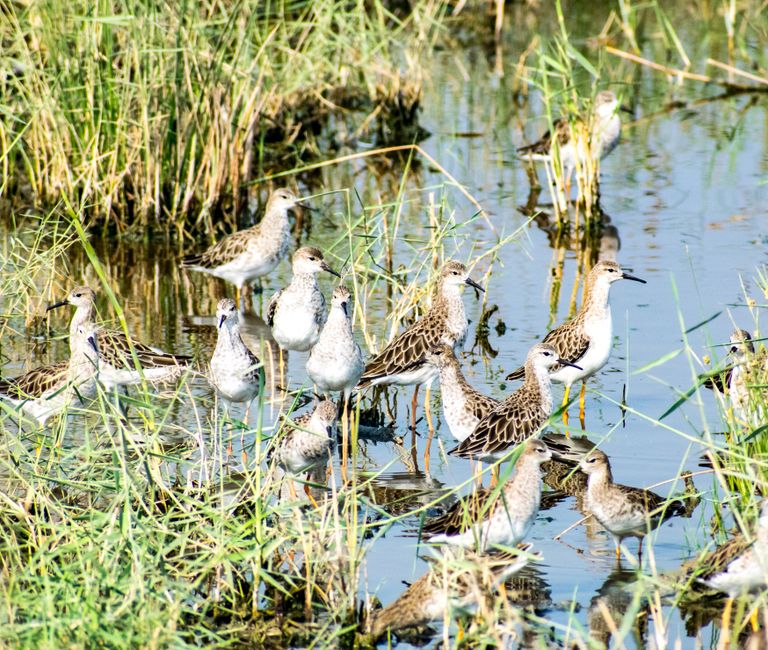
Seasonal Water Levels and Bird Activity
The Bangweulu Wetlands are dynamic, and the best birding often comes when water level changes create a new “feeding surface.” In practical terms, mixed flocks tend to be strongest when:
- water is shallow enough for probing and sweeping without birds having to swim long distances
- there’s edge habitat (reeds, floating grass, mud margins) that provides both food access and safety cover
When water is too high, birds may be spread out across deeper channels; when water drops too far, some shallow areas may become harder to forage efficiently. Your guide’s local knowledge of current conditions will usually be the deciding factor.
Weather, Light, and Visibility
Birds feed more when they feel safe and comfortable, and visibility depends on how the weather has been behaving. In general:
- early morning often brings calm conditions and steady feeding
- after rainfall can trigger renewed activity as insects and prey shift
- low wind helps you keep a stable approach and improves spotting through glare on water
Try to plan your most patient watching during times when the light is gentle. Harsh glare can hide subtle feeding movements, especially for smaller waders beyond spoonbills.
Time of Day for Spoonbills vs. Waders
Spoonbills can be easiest to track when they are in consistent feeding mode, which often happens during active periods of the day. Mixed wader activity may peak slightly differently between species, so the goal is to watch long enough to see transitions: feeding to preening, then back to feeding, often with other waders joining or leaving the area.
If you notice that spoonbills have stopped sweeping and are standing or preening, spend a little longer scanning the edges. That’s frequently when other waders appear at the periphery to exploit the same shallows.
How to Spot Them: Reading Feeding Behaviour and Flocks
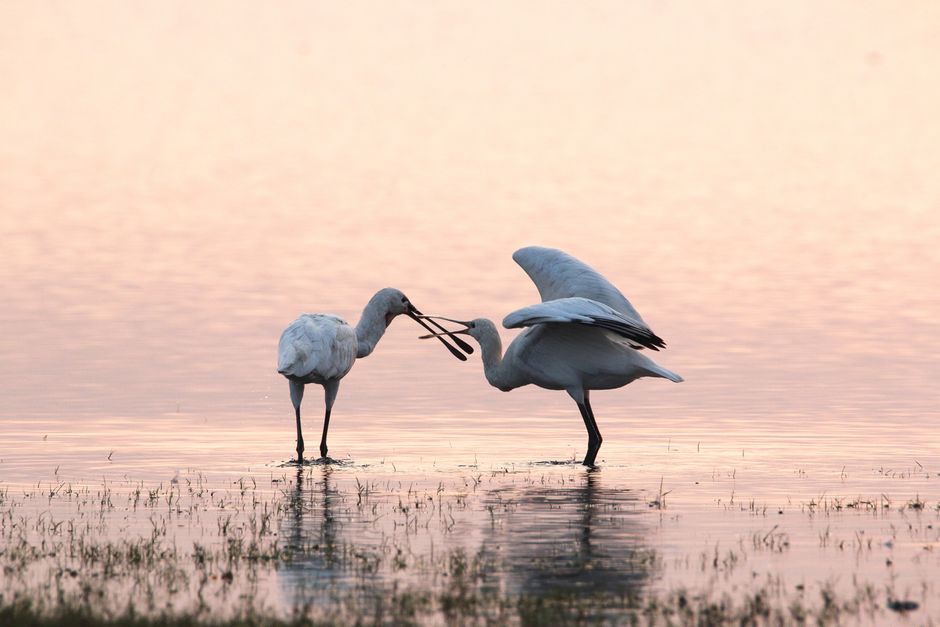
What African Spoonbills Look Like When Feeding
When conditions are right, spoonbills often move in a deliberate pattern: stepping slowly through shallow water, pausing, and then sweeping their bills. Their feeding line can look like a slow-moving arc, particularly when several individuals are working the same shallow patch.
To confirm what you’re seeing, look for the combination of shallow probing/sweeping and a steady spacing between birds. If birds are constantly lifting and dropping into flight, that often indicates disturbance or a change in water movement; in that case, give them space.
The Mixed Wader Checklist (Beyond Spoonbills)
Once spoonbills have drawn your attention, widen your scan to nearby micro-habitats. In Bangweulu, mixed wader flocks often include a range of long-legged and medium-sized birds associated with shallow water and edges, such as:
- herons and egrets stalking along shallows
- stork-like waders using a more upright stance for probing
- smaller sand and mud waders that move in quick bursts on exposed margins
Instead of trying to identify every species in the field, focus on behaviour and habitat first. Track where the group concentrates: open water feeding areas, reed-edge pauses, or mudflat probing lines. Once you understand the pattern, identifying individuals becomes far easier.
Staying Still Long Enough to See the Pattern
Many sightings are brief when observers arrive fast or move frequently. A more effective method is to reduce movement and wait for repeat behaviours:
- Watch for feeding sweeps or probing repeats in the same shallow patch
- Then look for “edge changes,” when birds drift toward reeds or floating vegetation
- Finally, scan the periphery for arrivals (often other waders joining the same feeding opportunity)
If you have binoculars and a spotting scope, keep your setup stable and avoid repeated adjustments that cause noise and movement.
Ethics, Safety and Conservation in the Wetlands
Safety on Soft Ground and in Shallow Water
Bangweulu’s wetlands can be deceptively uneven. Even when water appears calm, submerged vegetation and soft mud can make footing risky. On land, keep your weight distributed and stay on paths or areas your guide indicates.
In boats or canoes, safety is mostly about restraint: wear a proper life jacket, avoid standing, and follow your guide’s instructions about where to move and where to stop. If conditions feel unstable or visibility drops, prioritise safety over lingering for one more view.
Respect for Local Communities and Access Rules
Wetlands viewing in Zambia is closely tied to local livelihoods and community knowledge. Always use agreed access points, ask before approaching village land or working areas, and respect any boundaries set by your hosts.
If you’re invited onto a boat or into a paddle route, treat that access as a privilege. Keep discussions and movement quiet during feeding periods, and avoid blocking pathways birds use within the habitat.
Minimising Disturbance and Protecting Birdlife
The most ethical birdwatching is the kind that allows birds to keep doing what they came to do: feed, rest, and care for themselves. That means:
- keeping distance when birds are active
- limiting how often you approach new positions within the same feeding area
- moving only when the birds themselves show signs of shifting away
If birds flush, treat it as a signal to pause and reset. Returning too quickly can turn a productive zone into a restless one, reducing overall sightings and increasing stress.
Overall, your best results in the Bangweulu Wetlands will come from matching the habitat to the behaviour: prioritise shallow feeding edges, enter quietly via appropriate access points, and spend enough time in each zone to notice how spoonbills and mixed waders cycle between feeding and resting. By following these approach-minded viewing and welfare principles, you’ll see more birds while keeping the wetlands as healthy and calm as possible for future visitors and the local community that depends on this landscape.
Leave a Reply