
If you're hoping for a black rhino sighting, Etosha National Park in Namibia is one of the best places to search—especially when you time your waterhole drives well.
This guide shows you where sightings are most likely, how rhinos use water and habitat on the ground, and how to schedule your drives so you’re not just at the right place, but also at the right moment. It also covers safe, respectful viewing practices so your experience supports wildlife welfare.
Black Rhinos in Etosha: What to Expect

A mostly unseen browser
Black rhinos are browsers rather than grazers, feeding on leaves and woody plants. That means they may spend more time in thicker vegetation than in open grass, and their first sign is often not a clear silhouette but spoor, browsed shrubs, or the movement of birds reacting to something nearby.
On safari, this is why “where” matters as much as “when”. You’re aiming to be positioned near the areas rhinos reliably use for essential routines: drinking, resting, and feeding between water visits.
Why water is a daily magnet
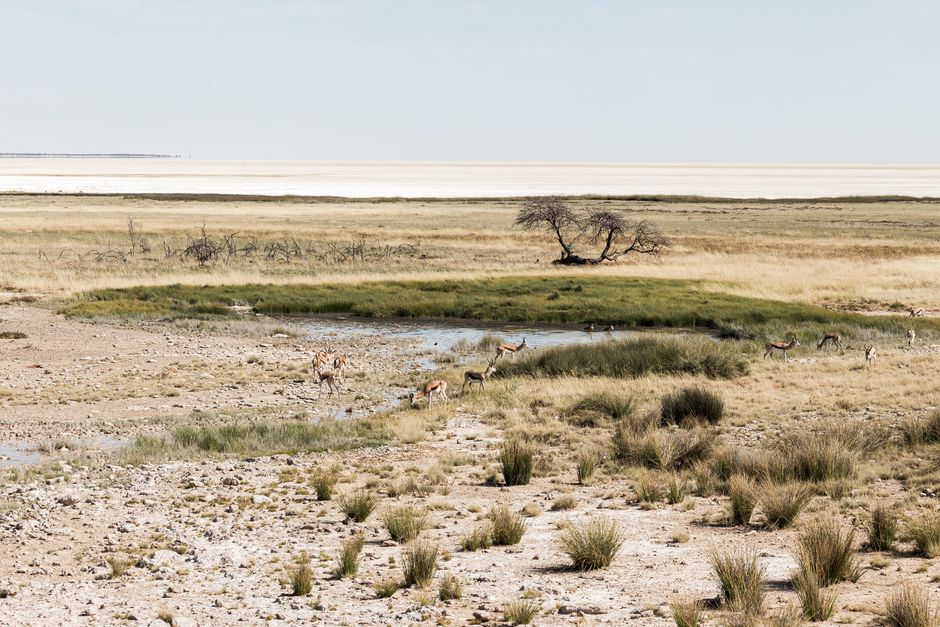
In Etosha, water availability drives movement. Even if rhinos are foraging far from a waterhole, they still need to drink regularly, especially during hotter, drier periods. Waterholes also concentrate many other animals, which can indirectly help you: rhinos may arrive when the scene is calm enough for them to drink, and when vegetation cover nearby offers a quick retreat.
Seasonal patterns that change the odds
Your chances shift through the year. During the drier months (roughly June to October), rhinos are more likely to rely on established waterpoints, and you’ll often see more concentrated activity at waterholes.
During the wetter months (roughly November to April), natural water can become more available in some areas, and rhinos may spread their movements more widely. That doesn’t remove the opportunity at waterholes, but it can change the timing and intensity of visits.
Where Black Rhinos Are Most Likely Near Etosha Waterholes

Three waterhole sectors to focus on
The most consistent, practical starting point is the network of waterhole areas associated with the main rest camps. These are commonly used for viewing because the timing is predictable for animals, and because guides and rangers can coordinate drives around known wildlife movement.
You’ll often hear these described as “waterhole areas,” meaning the water itself plus the surrounding vegetation where rhinos can approach quietly and disappear fast.
- Okaukuejo waterhole area (Etosha)
- Halali waterhole area (Etosha)
- Namutoni waterhole area (Etosha)
Because black rhinos can remain less visible than other species, the key is to treat these as targets for ranger-guided searching and patient watching—not as guarantees.
How rhino sightings usually develop
A common pattern is slow arrival. Black rhinos may approach from cover, stop briefly to assess the environment, and only then commit to drinking. If you arrive at the exact moment everyone else is leaving, you might miss the quieter window.
Instead, look for supporting clues as you set up: fresh tracks in sandy edges, recent browsing on shrubs near the water, and signs that birds have been active in a specific direction. Your guide’s notes and the latest ranger information are especially valuable because rhinos can change their routine from day to day.
Ranger updates and “current rhino” knowledge
Even in well-known areas, rhino locations can vary. The smartest planning step is to ask your lodge staff or guide for the most recent confirmation of black rhino activity in and around the camp’s waterhole region.
You’re looking for two things: whether black rhinos have been seen recently, and whether they were seen during the time window you’re planning to drive. That helps you decide whether to prioritize a morning session, late afternoon, or a night waterhole watch.
How to Schedule Waterhole Drives for Rhino Chances
Dial in timing: sunrise, late afternoon, and night watching
Waterhole activity often peaks around periods when animals feel safer and temperatures are more comfortable. For most wildlife in Etosha, that typically means:
- early morning movement tied to cooler conditions
- late afternoon activity as the day warms and then begins to cool again
- night-time drinking bouts when animals take advantage of lower vehicle presence (where permitted)
Black rhinos may not always drink during the most crowded moments, but timing still matters because you’re positioning yourself when their routine is most likely to bring them close to open sightlines.
Plan around the busiest waterpoints
When many vehicles arrive at the same time, visibility can improve in one way but worsen in another. Noise, light, and constant shuffling can encourage animals to pause or choose a different route into the water.
To schedule around the busiest waterpoints, aim for a “steady watch window” rather than a rushed arrival. Arrive early enough to settle quietly, then stay consistent rather than repeatedly moving your vehicle.
If your camp’s waterhole area becomes extremely crowded, consider waiting a little outside the core rush, provided your guide confirms black rhino presence and your timing aligns with safe park rules.
A simple timing template you can use
Use this as a starting rhythm, then adjust based on what your guide reports for that day.
- Arrive 60–90 minutes before the expected peak (so you can settle without rushing)
- Maintain a continuous watch during the peak hour, without repositioning frequently
- Stay until at least 60 minutes after the peak, because rhinos may arrive slightly later
- If it’s a night session, keep light low and follow your guide’s timing cues strictly
This approach helps you avoid the “arrive late, miss the quiet approach” problem that often affects black rhino sightings.
On-Drive Etiquette and Safety Around Black Rhinos

Keep distance, stay predictable
For black rhinos, predictable behaviour is part of the safety strategy. Keep your vehicle stationary when instructed, maintain an appropriate distance, and avoid sudden movements. If a rhino is approaching, you may need to remain still longer than expected; if it turns away, avoid chasing the moment with extra driving.
Your guide should also manage where you park relative to other vehicles so no one blocks sightlines or channels animals into stressful situations.
If a rhino approaches: what to do in the moment
Your priority is to give the animal control over the encounter. If a rhino comes closer than expected:
- stay calm and do not rev engines
- keep noise low and speech brief
- avoid shining bright lights into the animal’s eyes (especially at night)
If the rhino shows signs of discomfort—such as repeated head lifts, visible stress behaviour, or moving toward you with increasing focus—your guide should create space by easing back while respecting park rules.
Respect for people, habitats, and the park
Ethical wildlife viewing means more than being quiet. It also means not creating pressure that changes animal behaviour permanently. Follow speed limits, stay on allowed tracks and viewing areas, and never attempt to lure wildlife.
Where lodges and camps are involved, keep expectations realistic. The animals are not “performing” on demand; the aim is to view without interfering, and to support conservation and ranger monitoring systems that protect black rhinos and their habitat.
Making the Most of Your Etosha Rhino Search
Choose the right base and working rhythm
Because black rhinos may be less visible than other large mammals, the best strategy is often to build a rhythm into your stay. Staying near the main camp waterhole areas reduces unnecessary driving time and makes it easier to commit to longer watch windows.
When planning your days, factor in that you may need to return for another attempt. One short drive can be disappointing; two or three well-timed sessions, paired with guide updates, often feel more productive than a single “all-or-nothing” outing.
Combine day drives with night waterhole vigils
Black rhinos can appear in different light conditions, so mixing sessions can improve the odds—provided park rules and your guide’s advice support those outings.
Daytime drives can help with sign-finding, such as tracks and browsing, while night vigils can align with drinking routines at the waterhole. The most effective plan is usually a balanced schedule that covers different hours rather than only chasing one peak.
Record sightings responsibly and learn from each drive
If you spot black rhino activity (even spoor or browsing), share that information with your guide. Observations such as direction of travel, whether the animal was alone or with another rhino, and whether signs appeared near vegetation edges can help refine the next search.
This also keeps the experience respectful: the goal is to deepen ranger and guide understanding, not to turn animals into a spectacle.
Overall, the best black rhino opportunities in Etosha come from pairing the right locations with the right timing. Focus your waterhole attention on the main camp waterhole areas, follow ranger and guide updates for current activity, and schedule drives so you arrive early, watch steadily, and avoid the most disruptive crowd rush. Do that with patience and strict viewing etiquette, and your chances of a meaningful, low-impact black rhino sighting rise noticeably.
Leave a Reply