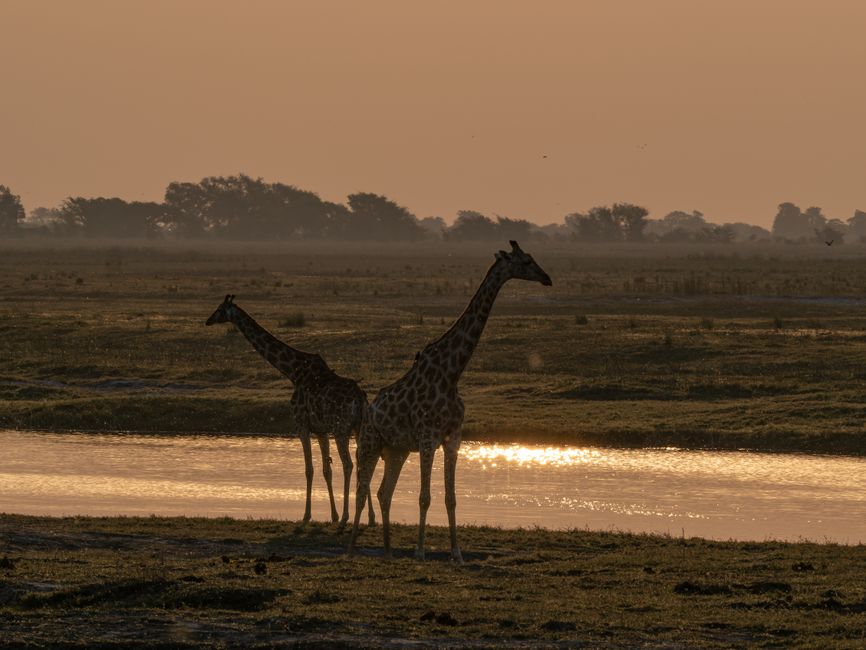
If you're planning a safari trip, you might be wondering how you can make your experience more sustainable.
This guide covers how to time a Chobe River sunset cruise from Kasane for golden hour, where the best viewing positions are on the boat, what animals you’re most likely to spot by season, and how to combine cruise days with Chobe land game drives.
Chobe is one of Botswana’s best places for wildlife along a moving river corridor, so planning well helps you see more while staying respectful of animals and the local communities that make these trips possible.
Getting the Timing Right: Kasane to Chobe Golden Hour
Work from sunset, not a fixed clock
Sunset cruises are all about light, movement, and relaxed animal behaviour, but the exact departure time matters less than the window you arrive into. Start by checking the local sunset time for Kasane, then aim to be on the water about 30–45 minutes before the sun drops. That’s typically when “golden hour” begins for photography and when many animals start to approach the river more confidently.
Because seasons shift day length, don’t assume the same clock time from one month to the next. If you’re comparing departure slots, Viator can be a practical way to check what’s running on your dates.
Arrive early for calm water and better scanning
Even if your cruise departure is scheduled at a set time, give yourself breathing room for check-in, getting settled on board, and allowing your eyes to adjust. The best wildlife spotting often happens when the boat is moving smoothly and you can watch for patterns: a herd approaching, birds lifting off, or animals using the riverbank as cover.
A relaxed start also helps you avoid rushing to the deck during the first exciting moments, when it’s easiest to miss the “lead indicators” like tracks on sandbars, ripples near hippo trails, and fresh droppings along the shoreline.
Choose your deck position for light and comfort
Most sunset cruise boats will offer at least one open or higher deck area for viewing. For wildlife spotting, prefer positions where you can see both the waterline and the banks without constantly changing direction. For photography, adjust your angle so the sun is behind or to the side of your subject rather than blasting directly into the lens.
When the light turns warm, animals often become clearer against the dimming background. During the last portion of sunset, wind can increase on exposed sections, so bring a layer and choose a spot that keeps you steady, not distracted by discomfort.
Where to Watch: Deck Setups and Best Riverfront Sections

Upper deck sightlines and spotting strategy
If the boat has an upper deck, it’s usually your best “all-rounder” for spotting elephants and other larger mammals along the Chobe River. From higher ground, you can scan sandbanks, shallow edges, and the line where reeds start—areas where birds feed and where mammals often pause before moving on.
Use a simple rhythm: scan the near banks first (where animals step out to drink), then sweep to the far bank (where herds may be silhouetted). As light fades, animals also become quieter, so pausing your scan for a few seconds helps you notice subtle movement.
Scan banks, sandbars, and reed edges
On the Chobe Riverfront, wildlife often concentrates where food and access overlap. Look for:
- Sandbars and muddy margins where hoof prints appear
- Reed edges where birds perch before taking short flights
- Underwater or partially submerged paths that suggest hippos are moving nearby
These micro-habitats matter because they guide your expectations. For example, hippos don’t always surface at the most dramatic moments; sometimes the clearest sign is a ripple line moving parallel to the bank.
Kazungula’s wider river system: more variety, more reason to stay alert
Depending on your route, cruises may operate near the broader river system in the Kazungula area. That can increase variety: different channels, changing widths, and more places for birds to rest between movements.
Keep an eye on where the boat slows or turns. Those changes often signal that the crew has spotted something worth your attention, and they’re a cue to tighten your viewing plan—binoculars ready, camera strap secure, and no standing where safety rules require staying seated.
Wildlife by Season: What Changes Through the Year

Dry season (May to October): river congregation and larger herds
During the dry months, the river becomes a reliable lifeline. Many animals concentrate along the Chobe River and nearby water sources, which means your chance of seeing larger groups increases. Elephant activity is often most noticeable around drinking times and travel routes, while hippos typically remain a consistent presence.
Bird life also remains active through the day, but dusk can bring a final burst of feeding and movement as the light levels change.
Green season (November to April): dispersed sightings, more smaller-scale action
In the wetter, greener months, animals may spread out because food and water are less concentrated in one corridor. You can still see wildlife from a sunset cruise, but you might get more “encounter variety” than dense clustering.
Focus on behaviour. Birds may be feeding actively in shallower edges, and mammals may appear briefly along the bank before moving toward greener cover. The key is staying patient through the calmer stretches rather than reacting only to the biggest animals.
Always look for the small signs
Some of the most memorable sightings start with the smallest clues: a line of tracks on the sand, fresh splashes where something moved just under the surface, or a bird repeatedly calling from a single perch. Dusk is a time when animals respond to safety, shade, and the comfort of predictable routes.
Seasonal highlights that are commonly worth watching for on a Chobe sunset cruise include:
- African elephant, often using the riverfront as a travel route and feeding area (more concentrated in the dry months)
- African buffalo, sometimes appearing in river-adjacent thickets and open edges (timing varies by local conditions)
- Hippopotamus, with frequent surface activity and earthen/riverbank trails along the boat’s route
- Nile crocodile, usually sunning on banks or moving slowly in shallows
- Waterbuck, which can browse near riverine cover when conditions bring them close
- Lion, less guaranteed but sometimes possible, particularly when other prey animals are active nearby
- African fish eagle, often seen patrolling stretches of water with a call that carries at dusk
- Pied kingfisher, a good “dusk indicator” around steady water and fishing perches
Combining Cruise Evenings with Chobe Land Game Drives

Link it to morning or late-afternoon drives
To build a full wildlife day, pair the sunset cruise with either a morning game drive or a late-afternoon drive (before you head to the boat). Morning drives often bring strong mammal activity when animals are moving between feeding and resting, and the light is ideal for spotting and viewing behaviour.
If you prefer a slower schedule, an early afternoon drive can work well too, as long as it still gives you enough time to reach Kasane and settle before departure. The goal is not to rush from one activity to the next, but to avoid the common pitfall: arriving tired and missing the best viewing windows.
Savuti and Linyanti: different habitats, different payoff
When your itinerary includes Chobe National Park beyond the riverfront, it helps to think in habitat terms. The river corridor is one style of viewing; the drier, more open and woodier areas inland can deliver different species and tracking opportunities.
Savuti is known for its dramatic predator-prey dynamics, while the Linyanti region (around the floodplain zones) can feel more water-and-wetland focused. Even when sightings overlap, the difference in habitat often changes the types of encounters you’re likely to get.
Use sightings to plan the next day
One of the smartest ways to combine cruise and land drives is to let what you see guide where you go next. If the cruise features a lot of birds and croc activity along a particular bank, it can hint that similar riverine conditions exist inland nearby. If you notice elephants repeatedly using certain corridors, consider whether land areas with comparable cover and access might be productive.
This approach works best when day plans allow flexibility: a morning drive that starts slightly later after breakfast, or a second drive day that can shift based on where wildlife is active that specific week.
Respect, Safety, and Responsible Viewing on the Water
Safe behaviour on boats and in close wildlife zones
Wildlife viewing on water is still wildlife viewing, so safety matters even when the mood is relaxed. Follow crew instructions about where you can stand, when you can move to the railing, and how to handle cameras and binoculars without obstructing others.
Also remember that dusk reduces visibility. Watch your footing, keep bags and loose items secured, and avoid leaning too far over water or banks where the boat may be moving. If the boat slows near animals, it’s not an invitation to crowd a single side of deck; it’s a cue to stay patient.
Follow anti-disturbance rules for mammals and birds
A responsible cruise keeps space between you and wildlife and avoids turning an encounter into an interruption. That means no shouting to “get the animals to look,” no sudden movement to chase a sighting, and no attempts to lure animals with sound or food.
For mammals, the most respectful behaviour is usually quiet observation. If animals change their pace, angle, or grouping in response to the boat, that’s a sign the situation needs to settle.
Support local stewardship and leave no trace
Sustainability isn’t only about what happens on the water. It’s also about how you manage waste, how you treat local staff, and how you respect the river and its communities. Use bins when provided, keep litter with you if they’re not, and be mindful of noise as you move through launch and riverfront areas.
When you plan ahead, you reduce stress for everyone involved, including guides, skippers, and local partners who manage the practical side of safe, low-impact viewing.
Overall, the best Chobe sunset cruise from Kasane feels like a well-timed partnership between light, patience, and respect: match your departure to golden hour, choose a stable viewing position on deck, know which animals are most likely by season, and build your itinerary by linking cruise evenings with smart land game-drive blocks inside Chobe National Park.
Leave a Reply