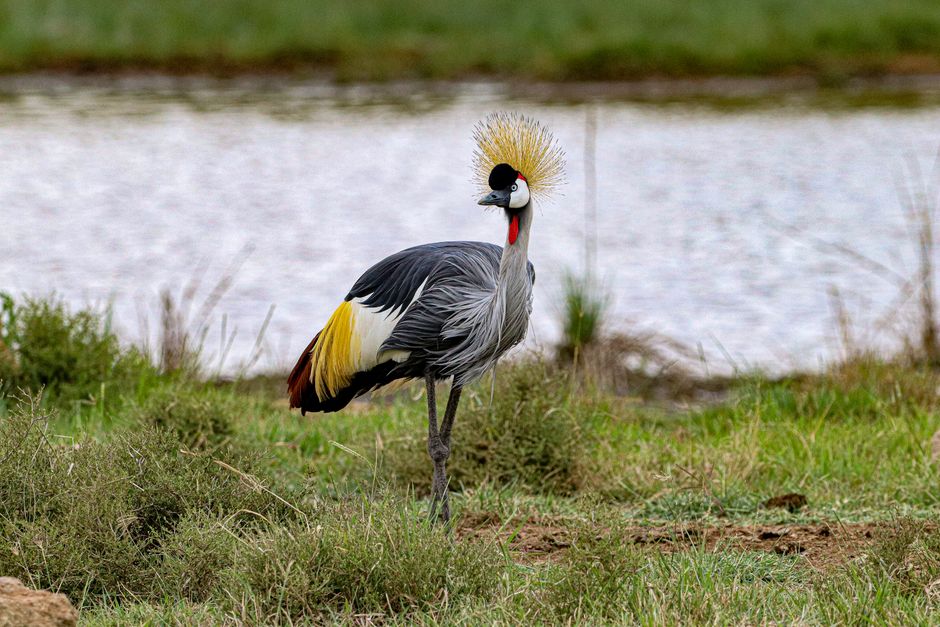
If you're a birding enthusiast, then you know that Africa is a paradise for birdwatching.
If you’re aiming for crowned cranes in the Western Highlands of Cameroon, timing is everything. This guide helps you plan the most reliable months to target the species, the best time of day to scan for them, and the base towns that make early starts practical.
The focus is on respectful wildlife viewing: keeping your distance, staying quiet, and working with local guides so you can enjoy the sight without disrupting nesting areas or fragile wet-grass habitat.
Best Months for Crowned Cranes in Cameroon’s Western Highlands

Many birders find that the main window for dependable sightings falls around the transitions into and through the drier season, when the landscape is usable and observation time isn’t constantly interrupted by low visibility or heavy rain.
Shoulder periods when weather stabilises
Crowned cranes don’t switch “on” for a single week. Instead, sightings improve when weather stabilises: mornings clear enough for scanning, and daytime temperatures make walking comfortable without pushing you into the heaviest rainfall periods.
If your trip dates land slightly outside the peak window, plan to prioritise flexibility. Choose days with better morning weather, and be prepared for the fact that cranes can move to different wet patches depending on recent rainfall.
Local guidance is your best month-to-month compass
Because microclimates vary across the highlands, the most reliable “month guidance” comes from your on-the-ground contacts. Use your guide’s knowledge of recent crane activity, water levels, and which meadows are currently drawing birds.
As a planning anchor, many visits focus around two key areas: Mount Oku and the Kilum-Ijim Forest Reserve, where targeted birding routes are commonly used to observe the species.
Daily Timing: When the Cranes Are Most Active

Aim to arrive at your observation point before the light turns flat and bright. That timing helps you detect slow movement in tall grass, and it gives you enough buffer to settle without crowding the birds.
The late-morning shift
After the first burst of activity, cranes may become more discreet. They still feed and move, but they can spend longer periods pausing, stepping into denser cover, or staying just beyond the most obvious viewing line.
If your first attempt doesn’t produce a clear view, don’t assume the day is “over.” Give it time, then reposition along a route agreed with your guide so you can keep scanning without chasing.
Weather timing that makes or breaks the day
Rain, mist, and heavy cloud can be a double-edged sword: they may reduce disturbance and keep cranes active, but they also limit your ability to see movement at distance.
A simple approach is to plan for two attempts—one early and one later—then use weather changes as cues for when to slow down, listen more carefully, and scan wider.
- Best to start: 30–90 minutes after first light (adjust for your exact location and daylight)
- Most productive scanning windows: early morning into mid-morning
- Second chance: late afternoon, when light angle can reveal movements across open grassland
Choosing a Practical Base: Towns for Early Starts

For crowned crane trips, the advantage of Bamenda is the ability to organise departures without losing daylight. You can also use the town for last-minute logistics such as warm layers, rain protection, and charging essentials before heading uphill.
Kumbo for routes linked to Kilum-Ijim
If your itinerary is oriented around the Kilum-Ijim Forest Reserve, Kumbo is commonly used as a practical staging point. Being closer to the western highland approach can shorten driving time and help you reach observation areas early enough to make the most of morning light.
A well-planned base also matters for welfare and safety: fewer rushed transfers mean fewer chances of skipping briefing, taking unnecessary risks on roads, or arriving at viewing sites stressed rather than calm.
Fundong and nearby stops for upland approaches
Some journeys include an additional overnight or daytime stop around Fundong when moving between regional routes and upland entry points. This can make early starts less punishing by breaking the journey and allowing you to wake up rested.
For finding straightforward accommodation, Booking.com can be useful when you’re checking locations and availability for Bamenda or Kumbo ahead of time.
How to Spot Crowned Cranes Without Disturbing Them

Stick to the route your guide suggests, keep your pace slow, and avoid sudden changes in direction. When cranes are nearby, they may pause and watch you as much as you watch them—so calm movement helps both parties.
Listen first, then scan
Crowned cranes are often easier to locate when you treat the search as a two-step process. First, tune into what your guide can hear—calls or movement indicators. Then, scan systematically using a consistent pattern (for example, a slow sweep across open grassland edges and wet patches).
Binoculars make a noticeable difference here. At higher elevations, distance can mislead your eyes, and a quick binocular sweep can confirm whether you’re seeing a crane silhouette or something similar in shape and colour.
Stay back for better views and better welfare
Close viewing is tempting, but it’s not what leads to the best long-term experience. The ethical goal is to observe behaviour—feeding, stepping through wet grass, preening, resting—without pushing cranes to flee or repeatedly relocate.
If cranes react by standing up abruptly, moving away fast, or increasing vigilance behaviour, that’s a clear signal to stop approaching. Give them space. Many wildlife-viewing rules in birding are really welfare rules: distance reduces stress, and stress-free cranes show more natural activity.
Safety, Ethics, and Conservation Notes for Crane Viewing
Photograph with discipline, not pressure
Using a camera doesn’t have to mean crowding. The safest approach is to set your equipment, keep noise low, and avoid long bursts that disturb surrounding wildlife.
A helpful mindset is “record without requesting.” If you need to step forward repeatedly to get a better frame, that’s a sign you’re too close. Instead, adjust your zoom, change your angle slightly while maintaining position, and let the crane come into a better view naturally.
Respect local land and community rules
In the highlands, access often depends on community understanding and careful practices. Your guide should handle permissions and explain which grassland edges are sensitive, which paths you can use, and where you should never enter.
If locals ask you to move on, that request should be treated as important information, not an inconvenience. Respecting those boundaries protects habitat and helps ensure that future birders can still view cranes in the same areas.
What your visit supports (when done thoughtfully)
Birding done responsibly encourages conservation value in ways that go beyond a single checklist. When observation is quiet, route-following is consistent, and guidance comes from people who know the ground, the experience is more likely to align with local efforts to protect wet-grass habitat and reduce disturbance.
Overall, the best crowned crane sightings in Cameroon’s Western Highlands come from matching the right season to calm daily timing—then building that plan around respectful observation. If you base your trip around Mount Oku and the Kilum-Ijim Forest Reserve, start your scans early, and keep distance while relying on local guidance, you’ll give yourself the strongest chance of seeing crowned cranes while treating the habitat and the people who share it with care.
Leave a Reply