If you're a birding enthusiast, then you know that Africa is a paradise for birdwatching.
If you’re also drawn to rare rainforest mammals, Douala-Edea National Park offers a rare combination: swampy forest channels where pygmy hippos may surface and a dense green world where birds can be heard even when they’re hard to see.
This guide explains what to expect in the swampy forest habitat, how sightings typically work, and how local guides maximise your chances for both pygmy hippos and forest species—without disturbing wildlife or communities.
Douala-Edea National Park: Swampy Forest Habitats for Rare Wildlife
Where the swamp forest wildlife is found
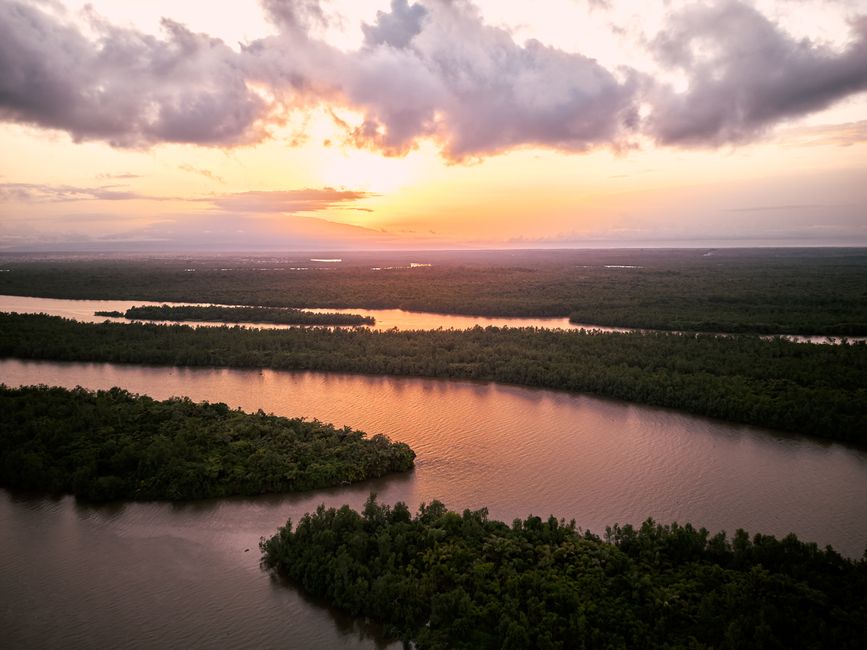
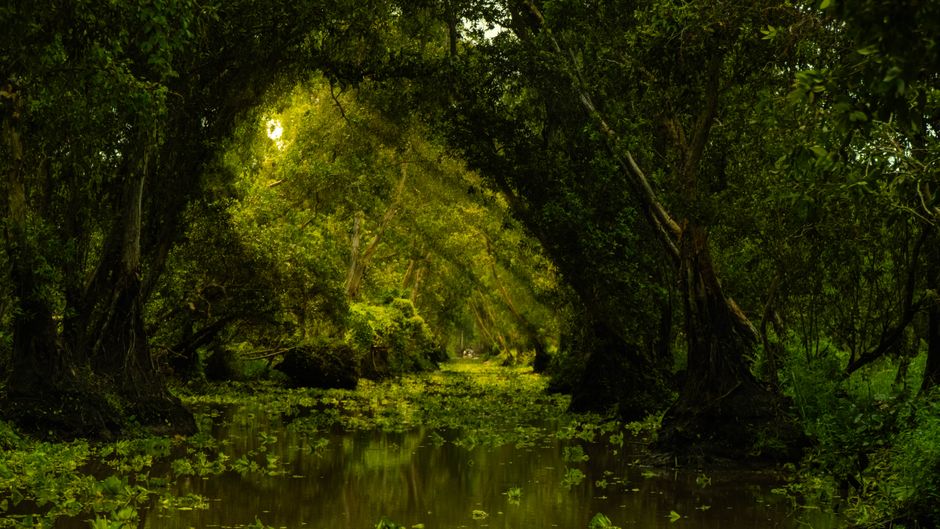
Douala-Edea National Park sits on Cameroon’s Atlantic coastal region, where waterways, flooded ground, and mangrove-adjacent patches create a landscape that stays damp. Instead of open savannah, you’re moving through habitats where visibility is often limited by tangled undergrowth, floating vegetation, and low, misty forest light.
That habitat matters because both target groups here depend on it in different ways. Pygmy hippos favour quiet, vegetated water and the edges where forest meets creek. Many rainforest birds use the same dense structure for cover, nesting, and feeding, so even when you can’t spot a bird clearly, you can still pick up calls, wingbeats, and movement.
How the habitat shapes your viewing
In swamp forest, sightings are rarely “spot and stare.” Conditions are changeable: water depth can shift with the tide and rainfall, and paths can turn into slippery channels or thick, muddy bends. Guides often choose routes that balance comfort, safety, and wildlife presence.
Expect to spend time slowing down. Moving too quickly through dense areas can push birds deeper into cover and reduce your chances of seeing both birds and hippos. Listening becomes as important as scanning.
Knowing your target: pygmy hippos and forest birds
Pygmy hippopotamus (Choeropsis liberiensis) is a shy, semi-aquatic species that may feed at night and linger near vegetated water in daylight. African grey parrot (Psittacus erithacus) is one example of the types of forest birds you might hear or glimpse in coastal forests and riverine woodlands.
Whether you’re birding by ear or hoping for a close view of a hippo at the water’s edge, success comes from matching the search approach to the habitat.
When to Go and Where to Start in Douala-Edea

Seasonal rhythms for access and comfort
Cameroon’s coastal weather influences both trail conditions and water levels. During wetter periods, the swampy ground can be challenging, but waterways can also open up more routes for quiet navigation. During drier months, land movement can be easier and visibility through lower undergrowth can sometimes improve.
Rather than chasing a single “best week,” plan around the idea that the park rewards calm preparation. The most productive days tend to combine early starts, respectful pacing, and flexible timing.
Morning, late afternoon, and evening timing
For birdwatching, early morning and late afternoon are typically when activity builds and vocalising increases. Birds need light to move confidently through the canopy and understorey, and they also feed when insects and fruiting cycles are active.
For pygmy hippos, the practical viewing window is often in the darker hours, when the forest feels quieter and animals may be more willing to appear near channels. Many guides schedule hippo-focused time after birding, so you’re not repeatedly pushing through the same area while animals are less likely to show.
Starting points and route planning with your guide
Because the park is all about swampy forest and waterways, your guide’s local knowledge shapes everything from where you enter to where you stop. Routes depend on water conditions, recent rainfall, and signs such as fresh tracks, disturbed vegetation, or commonly used entry/exit spots.
A good starting point also factors in your comfort and safety. If conditions are rough, guides may change the route rather than insist on a fixed plan that puts you at risk.
How Pygmy Hippo Sightings Typically Work in Swamp Forest

Why sightings are “earned,” not guaranteed
Pygmy hippos are not usually reliable “schedule animals.” They can spend long periods near vegetated water without surfacing prominently, and they’re sensitive to noise. Even when hippos are present, the first sign may be subtle: a disturbance in floating vegetation, an eye barely visible at the edge, or a brief movement that disappears into cover.
Instead of rushing, guides look for opportunities to let the environment settle. Once you stop making noise, the park often “talks back”—with sounds of water movement, calls from other wildlife, and eventual, quiet activity near the channel.
Three ways guides maximise chances
Most successful outings combine multiple search styles so you’re not relying on one method alone. In Douala-Edea, guides typically rotate between:
- Evening channel checks from a canoe/boat to read water edges and listen for activity close to cover
- Quiet swamp-forest walks at controlled times to look for signs and position you safely for brief sightings
- Slow, patient stops near likely entry points where vegetation, water depth, and sightlines create the best chance of a hippo appearing
These approaches reflect the reality of swamp forest: you need both proximity and patience, and the ability to remain still long enough for animals to resume normal behaviour.
What to do (and not do) when you hear movement
If the guide picks up on possible activity, the best outcome usually comes from immediate quiet. Keep your voice down, avoid sudden posture changes, and never attempt to stand higher than the group unless your guide asks you to.
Avoid the urge to wave arms through dense vegetation. In the swamp forest, “clearing the view” can create disturbance, damage plants, and reduce the chance of a clear, natural sighting. With hippos, restraint is part of the viewing skill.
Birdwatching in Douala-Edea: Listening, Light, and Low-Key Movement

How rainforest birds behave in dense cover
Rainforest birds often stay where they feel safe—inside the understorey, along vine tangles, or in the darker band of canopy. That means your first “sighting” may be a call you can’t immediately place, followed by movement that resolves into a glimpse before the bird disappears again.
Good birding here depends on reading patterns: repeated calls from the same area, consistent flight directions, and feeding behaviour near fruiting trees or stream edges.
Techniques guides use for better sightings
Local guides typically blend patience with structure. They may pause in areas where the forest opens slightly, use careful scanning at different heights (ground level, mid-storey, canopy edge), and adjust your position to avoid casting shadows across the bird’s path.
A practical mindset is to focus on one target at a time. Instead of chasing every sound, your guide may narrow attention to a specific call or feeding zone, then hold silence long enough for birds to respond.
Typical “sequence” of bird sightings
In a good birding session, it often goes like this: you hear calls first, then you track the direction, and only later do you get a partial view—maybe a silhouette, a flicker of wing pattern, or a moment at the edge of a vine curtain.
Over time, repeated listening and repositioning can turn brief glimpses into clearer views. The swamp forest can feel slow compared with open habitats, but that’s part of the charm of rainforest birding: a lot happens in short, quiet windows.
Responsible Safari Habits, Safety, and Making the Most of Your Days
Wildlife welfare comes first in swamp forest
Both pygmy hippos and rainforest birds rely on cover and calm. That’s why responsible viewing is not optional—it directly affects what you see. When animals feel pressured, they stop feeding, move deeper, or avoid the areas you’re trying to watch.
Practise “low impact by design”: stay with your guide, keep distance from water and channels, and don’t attempt to bait or coax wildlife. If a guide says it’s time to move on, follow that cue even if the sighting feels tempting to extend.
Safety considerations for water, mud, and low visibility
Swamp forest viewing comes with real-world risks: unstable ground, slippery banks, sudden water depth changes, and limited sightlines. Safety should shape pacing and equipment choices.
Some common-sense rules:
- Wear grippy waterproof footwear and keep an eye on footing at every stop
- Keep bags and phones secure during boat and canoe segments
- Stay quiet and still when a hippo or bird might be nearby—sudden movement increases risk
- Follow the guide’s water-distance guidance and never approach hazards to “get a better photo”
Planning an itinerary that balances birds and hippos
To make the most of your time, a well-planned day typically alternates between daytime birding and later hippo-focused searching. Birds may be easier earlier in the day when sounds carry through calmer air and the forest is awake, while pygmy hippos often require lower light, quiet, and a slower tempo.
If you’re trying to see both groups, remember that the viewing goal isn’t to cram every minute. It’s to keep disturbance low while increasing the quality of each viewing window. Many travellers also find it useful to mentally switch gears: birding is about patience with sound and movement, while hippo viewing is about waiting for rare, subtle behaviour.
When planning logistics, Booking.com can be a practical starting point for comparing which areas and timing best match your priorities, especially if you’re coordinating transport to the park.
Overall, the best Douala-Edea safari for pygmy hippos and rainforest birds comes from embracing the swampy-forest rhythm: slow movement, strong listening skills, careful positioning guided by local expertise, and wildlife-first habits that keep animals comfortable enough to show themselves naturally.
Leave a Reply