
If you love wetlands and wildlife, then Kafue National Park is where you can watch lechwe and sitatunga move through the floodplains.
This guide shows you the best floodplain areas in Kafue for these marsh specialists, how to use safe boat or shore access points for viewing, and what timing helps you get calm, responsive sightings.
You’ll also get practical viewing ethics: how to stay at a respectful distance, reduce disturbance around reedbeds, and support long-term protection of the wetlands that these antelopes depend on.
Where to Find Lechwe and Sitatunga in Kafue’s Floodplains

When choosing where to stand or sit, focus on the shoreline edges where the grass changes from submerged to partially wet. That transition is where lechwe tend to forage, and it typically offers clearer viewing angles without pushing you deeper into fragile vegetation.
Busanga Plains for mixed-water wetland edges
Busanga Plains can be a rewarding area when floodwater creates a patchwork of shallow pools, seasonally flooded grass, and grassy islands. Compared with the broad openness of some other floodplain sections, Busanga can feel more “interlaced,” so locating the best viewing spot often comes down to reading the waterlines. Look for places where vegetation forms natural lanes and where the wind carries less disturbance across the wetland.
Sitatunga may be easier to find where vegetation is denser and water is slower, creating cover for cautious movement. Patience usually pays off here: sit quietly, watch for subtle head-and-neck silhouettes, and only reposition when there’s a clear reason.
Marsh specialists: habitat overlap, different tell-tales
Lechwe and sitatunga can occur in the same wider floodplain ecosystem, but they tend to use different levels of cover.
Lechwe are generally more visible in open floodplain grass edges, where they can feed and move with confidence while still staying close to water-based refuge.
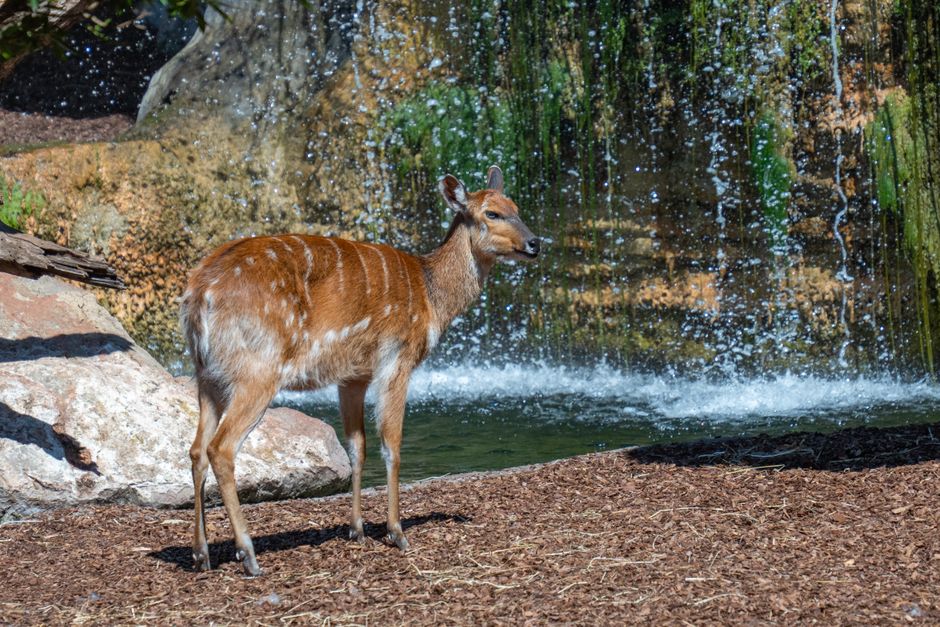
Sitatunga are more strongly associated with reedbeds, swampy channels, and places where thick vegetation creates natural hiding cover. If you’re not seeing them immediately, don’t only scan for bodies—also watch for disturbances in reeds, water ripples caused by cautious steps, and brief moments when a silhouette appears and disappears.
Boat and Shore Access Points for Floodplain Spotting

A good boat approach is one where the guide can slow down well before you reach likely animals, allowing antelopes to settle rather than react. Moving too fast or cutting across narrow corridors tends to scatter sightings.
Reedbed shorelines that offer natural sightlines
When shore access is used, the goal is to pick a shoreline edge that provides a clear line of sight without stepping into soft, trampled wet ground. Look for firm grassy banks or areas where reedbeds form a “wall” behind the animals—this can create privacy for them and better visibility for you.
Also consider wind direction. Standing with the wind at your back can help reduce the chance of animals catching your scent, especially around the drier edge where they might lift their heads to check surroundings.
Using safe stopping points at the water’s edge
Whether viewing from boat or shore, the most successful sightings often come from planning a few safe stopping points rather than repeatedly approaching. Your guide should be able to pause at locations that balance sighting quality with minimal disturbance.
If animals move away quickly, treat that as information: the chosen edge may be too narrow, too exposed, or too close to a disturbance point. Backing off and waiting for calm behaviour is usually the fastest route to a second look.
When Marsh Specialists Are Most Likely to Show Well

Sitatunga can be most responsive when reedbeds and swamp pockets hold stable water and cover. During major extremes—either very high water that forces animals into tighter channels, or very low water that reduces cover—sightings can become more sporadic.
Time of day for calmer scanning
Early morning and late afternoon are typically the easiest windows for scanning: animals often move more, and glare on open water is reduced. Midday can still work, especially in shaded reed-lined areas, but you may see shorter bursts of movement rather than long foraging sessions.
A practical strategy is to begin with broad scanning across open floodplain edges (for lechwe), then narrow in toward denser vegetation pockets when you’re looking specifically for sitatunga signs.
Weather, water clarity, and what they signal
Light rain or overcast conditions can help because contrast is lower and animals feel less exposed. Very windy days can make viewing frustrating because ripples and constant movement in reeds make it harder to separate natural reed motion from animal behaviour.
Water clarity also affects what you can see from a distance. When water is very churned by recent rains, it’s often better to focus on edges where visibility is strongest and where animals are likely to emerge to feed.
Ethical Watching in Sensitive Wetlands
A simple rule is to let the animals set the pace. If they stop feeding and start watching intensely, or if you notice repeated head-up checking, that’s a sign to pause, reduce motion, and wait.
Stay quiet, minimize light, and limit engine impact
Noise travels differently across wetland water and reedbeds. On boats, smooth, slow movement is typically more respectful than frequent repositioning. On shore, keep voices low and avoid walking directly through reeds.
When using lights or phones at night or in low light, focus on safety and your guide’s instructions. Bright beams can cause unnecessary stress, especially for species that rely on cover.
Respect local knowledge and community access
Kafue’s wildlife thrives alongside people who understand where access is practical and where it is not. Always follow local rules on where vehicles can stop, where boats can land, and which paths keep impact low.
If your guide asks for changes to your viewing plan due to safety or habitat sensitivity, treat that as part of responsible wildlife watching rather than a disappointment. The goal is to see wildlife while protecting the wetland ecosystem and the communities living near it.
Planning Your Kafue Safari for the Best Odds
Choose the sector that matches your target
If your priority is lechwe, focus on the Kafue Flats and the broader floodplain edges where water creates feeding boundaries. If sitatunga is the priority, build time around areas where swampy pockets and reedbeds are more prominent, and plan to spend longer scanning for subtle signs.
For a balanced approach, many itineraries combine time across floodplain sections so you can switch between open-edge viewing and denser-vegetation searching.
Work with a guide who understands water behaviour
The best viewing depends on reading the water—where it’s spread, where it’s deeper, and where the safest edges are for you to watch from. A licensed, experienced guide should be able to interpret current conditions and choose viewing points that are both ethical and likely to deliver animals.
Ask how sightings are being tracked that day, and whether the route is being adjusted based on recent animal movement and weather.
Build flexibility around water levels
Even within the same season, water levels can vary widely from year to year. Plan for flexibility rather than expecting a single “perfect” time. If conditions change, a guide should be able to shift focus toward the floodplain sections where cover and accessible edges remain likely.
By following these… you’ll increase the chance of calm, close-enough viewing of both lechwe and sitatunga in Kafue National Park. Prioritise floodplain edges for lechwe, reed-and-swamp cover for sitatunga, use boat or shore access where disturbance is lowest, and let water conditions and local guidance steer the day’s best viewing decisions.
Leave a Reply