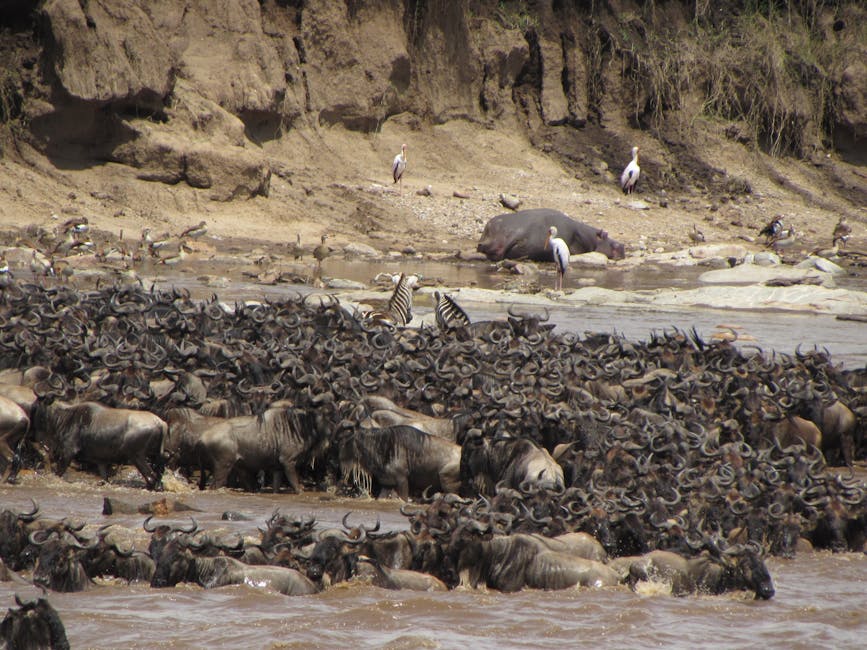
If you’re planning a Kenya safari trip, you might be wondering how you can make your experience more sustainable.
With the Mara River crossing, sustainability and enjoyment start before you ever reach the river. When a guided vehicle is involved, your schedule needs to support animal welfare, reduce stress on wildlife, and keep your team safe while still giving you good chances of seeing river activity.
This guide walks you through a practical itinerary approach for the Mara River crossing window, including a three-part scouting rhythm, a morning-vs-afternoon drive strategy, and what to confirm with your guide before you book.
Understanding the Mara River Crossing Window

What drives the timing
Crossings along the Mara River don’t happen on a neat calendar, even though many safaris aim for the same general season. In practice, crossing “windows” form when several factors align: the movement of grazing herds, rainfall affecting river flow and banks, and predator activity that influences how quickly animals commit to water.
For planning, think of the crossing window as a period where crossings are possible and the direction of movement matters more than a single guaranteed moment. Your goal with a guided vehicle is to stay flexible enough to follow the herd’s decisions.
Where crossings tend to cluster along the river
Even when you’re focused on the Mara River crossing itself, activity doesn’t spread evenly along the entire river stretch. Your guide’s local knowledge matters, because the most productive viewing tends to be near known crossing points where banks are passable and herds can approach with fewer obstacles.
To help you picture what your itinerary might cover, these are the kinds of areas a guided vehicle often uses during the crossing window:
- Masai Mara National Reserve
- Mara North Conservancy
- Olare Motorogi Conservancy
- River-front crossing zones along the Mara River corridor
- Serengeti National Park (across the border, when herd movement links into the system)
How guided vehicle access changes your plan
A guided vehicle lets you reposition quickly and keep your sightings organized, but it also changes what a “good plan” looks like. Rather than chasing every report, you’ll get better results by building a routine around confirmation: where animals are spending time, whether they are funneling toward the river, and how that shifts over the day.
This is especially important ethically. Repeated stops in the wrong place can crowd animals and disrupt calmer approach behavior. A solid itinerary uses time to observe from safe positions, then moves decisively when the signs justify it.
Three-Part Scouting: Build a Reliable Picture

Scout 1: Early morning signals and positioning
Morning scouting works because herds often start their day’s movement with a clearer pattern: animals cluster to graze, then gradually funnel toward water if that’s where they’re headed. For a guided-vehicle itinerary, the first scouting phase should be about identifying strong indicators without forcing decisions.
What to look for early in the day:
- Herd density increasing in the direction of the river
- Tail-end agitation and coordinated movement (a sign the group is deciding)
- A visible approach line where many animals orient toward the same bank
Just as important is how you view. Your guide should be able to position the vehicle for a stable, respectful line of sight without blocking routes or repeatedly driving back and forth past the same approach area. Early scouting is for confirming direction, not for creating pressure.
Scout 2: Late morning verification from safe pull-offs
Late morning is when plans often become more accurate or more frustrating. The herd may commit to the river, or it may pause, graze longer than expected, or change direction due to disturbance or predator presence.
In this phase, your guided vehicle should focus on verification rather than excitement. Good late-morning scouting answers: Are animals continuing to move toward the crossing zone, or are they drifting away?
Ask your guide to interpret what you’re seeing using a calm, repeatable method. Examples of verification indicators include:
- Continued concentration toward the same approach area
- Fewer counter-movements (animals not constantly turning back)
- Stable viewing conditions from a safe pull-off, so you can watch without constantly relocating
If the picture is weak, this is also where your itinerary earns its value. Instead of burning the whole day in one place, your guide should use the information to decide whether to hold and watch, or pivot to a better-aligned area.
Scout 3: Afternoon movement checks and contingency
Afternoon scouting matters because wildlife decisions can change as light, temperature, and predator activity shift. Even if the herd did not cross in the morning, activity can intensify later when animals assess risk and opportunity.
A good three-part itinerary treats the afternoon phase as a structured contingency. You’re not waiting in a passive way; you’re watching for the next phase of movement and preparing your vehicle approach to avoid sudden, disruptive repositioning.
In practical terms, your guide should confirm:
- Whether animals are re-focusing on the river corridor
- If approach activity restarts (fresh groups moving toward banks)
- Whether the safest and most respectful viewing position is still the same or needs a change
This three-part rhythm—early signals, late verification, afternoon follow-up—helps you avoid the common mistake of treating every day like a single fixed appointment.
Morning vs Afternoon Drive Strategy

Morning drives: calmer roads and first decisions
Morning drives can be more efficient because your day starts before heat increases animal restlessness and before traffic patterns become busier in key areas. That often means better visibility and more predictable road conditions.
For itinerary planning, a morning-heavy approach works best when your first scouting indicators are strong. If the herd orientation toward the river is clear and ongoing, your guide can justify spending more time in the same sector while still respecting animal space.
However, the success of a morning plan depends on discipline. Your guide should prioritize slow observation and minimal vehicle movement. A vehicle that constantly repositions can inadvertently increase stress for wildlife and create safety issues for everyone watching.
Afternoon drives: heat, water levels, and predator activity
Afternoon brings shifting dynamics. River flow may look different as rainfall patterns change from day to day, and animals sometimes commit to water later when they feel the risk is acceptable. Predator presence can also influence timing, including how tightly animals keep to the group.
For your strategy, think of afternoon drives as “response time.” Your guide should have a plan for where to go next based on what the herd is doing right now.
If the afternoon signs are positive, viewing can become intense, but your approach should remain steady. Avoid crowding the edge of the action. If the herd is moving, keep enough distance so animals can continue their decisions without interference.
Rotating your team effort without rushing animals
Even with the best planning, river dynamics can be unpredictable. The most workable itinerary is one that uses time as a resource rather than using impatience as a driver.
A simple way to rotate your effort is to assign roles within your vehicle team before the day starts: one person focuses on approach direction, another on animal behavior shifts, and your guide on vehicle positioning and safety.
When everyone understands what they’re watching for, the group is less likely to overreact to brief changes. That matters for welfare and for your own safety—sudden movement, sudden turns, or last-second repositioning can put people at risk.
What to Confirm With Your Guide Before You Book

Vehicle rules, viewing distance, and turnaround time
Before booking a guided vehicle safari focused on the Mara River crossing window, you’ll want clarity on practical operating rules. These are not just comforts; they directly impact safety and animal welfare.
Confirm that your guide will:
- Keep a respectful viewing distance and avoid blocking animal routes
- Minimize unnecessary engine noise and sudden repositioning near wildlife
- Use a consistent turnaround plan if the herd doesn’t commit that day
This also prevents the “half day chase” that can create frustration. A guide who has an ethical and operational process is more likely to create a calmer experience even when crossings don’t happen on your schedule.
Communication, flexibility, and backup locations
A strong guided-vehicle plan relies on communication. Ask how the guide gathers real-time information—without expecting them to promise miracles.
You should confirm whether your guide has:
- A method to coordinate sightings and updates while staying within local rules
- A contingency plan if activity is quiet in the morning
- Permission and practical ability to move to alternate areas without rushing into traffic-heavy spots
Good contingency planning protects your time and reduces pressure on wildlife. It also helps you avoid unsafe road behavior when multiple vehicles converge.
Ethics on the ground: respect for wildlife and communities
Ethics are not separate from itinerary planning. They are the foundation that keeps wildlife calm and keeps visitors safe.
Ask your guide how they handle close viewing and how they prevent crowding at river edges. You can also confirm how they treat community boundaries and shared spaces near the ecosystem.
During crossing-window activity, it’s easy to assume that “more people equals more chances.” In reality, too many vehicles in one place can disrupt herd behavior and can increase risk if animals react unpredictably.
A responsible guide should be able to explain, clearly and calmly, how they keep the group’s impact low while still creating a high-quality viewing experience.
Turn the Window Into a Smooth Kenya Itinerary
Pair the Mara with nearby conservancies and rest breaks
If the itinerary is only about the crossing, it often becomes exhausting and stressful for everyone involved. Instead, think of the Mara River crossing window as the anchor, with surrounding time structured for observation, repositioning, and recovery.
The conservancies and reserve areas your guide can use may include:
- Masai Mara National Reserve
- Mara North Conservancy
- Olare Motorogi Conservancy
These are not just locations; they help you build a rhythm. When crossings are active, your vehicle can focus on the river corridor. When they’re not, you can spend time in adjacent habitats where you still have excellent wildlife viewing without repeatedly pushing into the same crossing approach.
Plan around lodge timing and meal rhythm
To keep the day sustainable, your lodge schedule matters. Choose timing that allows you to get to the river in good time for early scouting without rushing.
If you prefer structure, many travellers find it easier when accommodation planning includes flexible check-in and straightforward meal arrangements. For a practical approach, Booking.com is one way to check availability and room options when building a multi-day window around the crossing.
Whatever the lodging approach, the key is that your guide should not be coordinating last-minute logistics while you’re trying to watch wildlife. A calmer itinerary reduces fatigue and supports safer decisions.
What you can expect during the window
While a crossing is the headline event, the broader crossing window is often where the most rewarding wildlife behavior happens. The most common animals you may see repeatedly during this period include:
- Wildebeest
- Zebra
- Crocodiles
- Hippos
- Lions
These species are part of the same living system, so their presence can shape timing. Predators near water can influence how quickly herds commit, while water-edge animals can signal where the herd will be forced to slow and assess risk.
Overall, the best Mara River crossing itinerary is the one that treats timing as a process: three-part scouting to build a realistic picture, morning vs afternoon drive decisions based on evidence rather than hope, and clear confirmations with your guide on vehicle conduct, communication, and ethics. With that structure in place, your guided-vehicle safari in Kenya can stay safe, respect wildlife welfare, and make the most of the crossing window when the herd finally commits.
Leave a Reply