
If you're a birding enthusiast, then you know that Africa is a paradise for birdwatching. A Tassili n’Ajjer desert safari in Algeria can pair that thrill with an equally unforgettable journey into some of North Africa’s most important rock art landscapes.
This guide walks you through logistics (including practical 4x4 transfers), when and where to look for sandgrouse, and how to view rock art responsibly. It’s written to help you plan a trip that respects wildlife, protects cultural sites, and keeps everyone safe in remote terrain.
Understanding Tassili n’Ajjer for Sandgrouse and Rock Art

Why the plateau attracts desert birds
Tassili n’Ajjer is all about extremes: vast sandy and stony plains, scattered rocky outcrops, and plateau edges where shade and micro-habitats matter. Desert birds such as sandgrouse move with the daily rhythm of heat and water availability. During the coolest parts of the day they forage over open areas, then return to watering points.
Rock art landscapes: what you’re seeing
Tassili n’Ajjer is famous for rock paintings and engravings that document changing climates and human lifeways over long periods. Many panels are located where people have historically gathered near routes, seasonal resources, or travel corridors. That means your viewing experience is tightly linked to where vehicles can safely go, where guided walks are permitted, and how you approach the panels.
Habitat and access zones to keep in mind
Expect a mix of long drives and short guided walks. Birding is usually best from a respectful distance near likely watering areas or flight lines, while rock art requires slower, quieter movement so you stay on designated paths and avoid damaging surfaces. Good planning helps you balance time between bird windows and rock-art viewing without rushing either.
- Tassili n’Ajjer National Park
- Sandgrouse (Pterocles spp.)
- Tin Tazarift rock-art area
- Designated campsites and guided day-use zones inside the park
Logistics and 4x4 Transfers Across the Desert
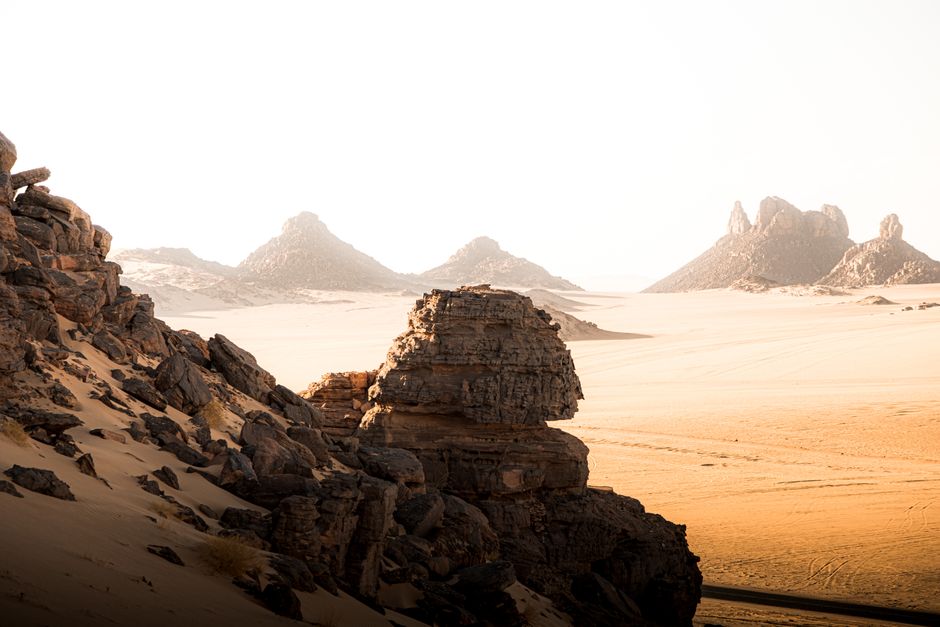
Choosing the route and the right 4x4 setup
Tassili trips typically start from Djanet (a common gateway in this region) and then move into the park on 4x4 roads and tracks. In remote desert country, the “best route” is less about speed and more about vehicle reliability, driver experience, and staying aligned with permitted access.
When arranging your transfer, confirm that the plan matches your group size and comfort level. A reputable local operator will consider tyre pressures for sand travel, carry spares for punctures, and plan for the slowdowns that come with navigation, rockier sections, and weather changes.
Viator can be used to compare guided Tassili n’Ajjer safari options, but the key is to verify that the itinerary includes appropriate permits, local guides, and responsible access to rock-art areas.
Timing for safer travel (heat, visibility, navigation)
Desert travel is safest when you avoid the worst heat and keep daylight working for navigation. Many safari teams prefer to drive during early morning or late afternoon, reserving midday for breaks and short walks near safe, shaded locations when feasible. Night driving is risky without strong local guidance.
For birding, the travel plan should protect your dawn and dusk windows. That often means positioning near suitable areas before you begin scanning, rather than assuming the birds will “arrive on schedule” at a stop the moment you disembark.
Camp-to-site access: permits and guides
Inside protected areas, rock art access usually comes with rules: you may need a guide, you may need permission to enter certain zones, and you should be directed along approved routes to reach panels. Your guide’s job is not only interpretation, but also stewardship—helping groups avoid surfaces that can be stained, scratched, or otherwise altered.
Ask in advance how your day is structured: when you’ll drive, when you’ll stop for birding, where you’ll walk, and how long you’ll have at each rock-art site. Clear timing reduces pressure on wildlife (fewer urgent stops) and helps keep everyone hydrated and mentally fresh.
Best Times and Conditions to See Sandgrouse

Morning and evening watering behaviour
Sandgrouse are often most detectable at dawn and dusk, when temperatures are lower and birds are moving between feeding areas and watering points. The watering routine is frequently the moment birdwatchers can observe them most clearly, because birds gather to drink and are usually less concealed in those brief windows.
Plan for the fact that desert conditions can shift quickly. Even within the same season, watering activity can move earlier or later depending on heat and wind, so arriving a little ahead of expected bird activity matters.
Weather cues: wind, cloud cover, and heat
In deserts, wind affects everything: it changes how birds fly and how sound carries, and it can also affect visibility over open ground. A calmer morning often makes it easier to pick up silhouettes, while stronger wind can either hide movement behind blowing sand or push birds to use different flight lines.
Cloud cover can change the “feel” of the light, which may influence how long birds stay active. The practical approach is to treat forecasts as context rather than certainty, and to keep scanning consistent at the start and end of the day.
How to position without disturbing
Sandgrouse respond quickly to disturbance, so your best tools are patience and positioning. For birding from vehicles, keep engines off when feasible, stay quiet, and avoid sudden movement as birds approach. For any short walks (only where your guide allows), keep the group compact and move only if you have a strong reason.
To avoid crowding the birds, use binoculars and a scope if you have one, and take time to identify behaviour before trying to relocate. If the birds move away, stop “pursuing” them. Waiting often works better than chasing.
Responsible Rock-Art Viewing in Tassili n’Ajjer

Leave no trace: how to approach panels
Rock art surfaces can be delicate, and they are easily damaged by touch, abrasion, and unintentional contact from bags or clothing. A responsible viewing approach is simple: stay off fragile areas, don’t step over or climb directly on panel locations, and keep a respectful distance that still allows you to see details.
Your guide should show you where to stand and which paths to take. If a location is restricted or a panel is particularly vulnerable, follow the guidance without improvising. The goal is to observe, not to test boundaries.
Photography rules for pigment and surface
When photographing rock art, avoid flash where it could be disruptive, and be careful about equipment placement. Tripods and monopods can increase the risk of knocking dust onto panels or accidentally tapping fragile edges. If you use stabilization tools, position them so they never touch the rock face.
If there’s no suitable viewing angle from a safe standing area, it’s better to step back and frame wider rather than leaning in. Also remember that windblown dust can settle on pigment; keep movements smooth and minimal.
Respect local knowledge and sacred areas
In many places, rock art is not just “heritage décor” but part of living cultural meaning. Even when a site is open to visitors, it can still be sacred or sensitive. Listen to what your guide explains, ask permission where appropriate, and keep conversations and group noise under control.
If you’re invited to view from a particular spot or take a specific route, treat that as a conservation measure. Small behaviour choices—staying quiet, keeping distance, not touching—are what make the difference between a memorable visit and lasting harm.
Putting It All Together: A Practical Safari Planning Checklist
Draft a realistic 3–7 day plan
A good Tassili n’Ajjer itinerary balances driving time, birding windows, and guided rock-art visits. If the plan is too aggressive, you’ll miss sandgrouse activity because you’re arriving late to the right habitat, or you’ll rush rock-art viewing and risk drifting off designated routes.
Consider structuring each day around light. For example: an early start for bird scanning, a mid-morning recovery period if the ground gets too hot to walk comfortably, and an afternoon/evening window for either additional birding or a second rock-art visit depending on access.
What to pack for heat, dust, and long drives
Desert travel is physically demanding. Pack for dust exposure, sun protection, and long periods off-grid. Practical essentials usually include breathable clothing, a sun hat, sunglasses, and plenty of water capacity suitable for the trip length. Many travellers also benefit from a headlamp for tented nights and a way to protect sensitive equipment from sand.
It helps to keep your most-used items accessible during vehicle stops so you can act calmly when birds appear. In desert conditions, time wasted searching for gear becomes time lost for the best viewing light.
Safety and wildlife welfare that guide your decisions
Treat safety as part of wildlife respect. Avoid running engines at close range when birds are approaching, and don’t pressure animals into flushing just to “get the shot.” If weather worsens—especially visibility issues from blowing dust—your best move is to follow your driver’s judgement and prioritise stable, safe positioning over chasing sightings.
Equally, protect cultural sites by using guides, respecting closed areas, and ensuring your group doesn’t touch or climb on panels. Your actions are the conservation contribution, because the rock art and the desert birds both depend on long-term protection, not short-term access.
Overall, a successful Tassili n’Ajjer trip for sandgrouse and rock art comes down to pacing and preparation: plan your 4x4 transfers with safe daylight driving in mind, protect dawn and dusk for birding in the right habitats, and view rock art using strict, low-impact behaviour guided by local rules. By following these practices, you’ll come away with meaningful sightings and a lighter footprint in a landscape that still needs both care and patience.
Leave a Reply